
Facing your Self Assessment as a self-employed professional can feel overwhelming, especially when you need to keep track of every expense and income source. Without a clear system, tax season quickly becomes stressful and errors can lead to costly consequences. Luckily, there are proven methods that help you simplify the process and keep your finances organised throughout the year. This guide will reveal practical strategies you can apply right away, from knowing which documents to collect to using digital tools and understanding deductions. Get ready to discover actionable steps that will make your Self Assessment smoother and more accurate than ever.
Table of Contents
- Gather All Income and Expense Records Early
- Understand Allowable Expenses and Deductions
- Use Digital Tools to Track Finances Easily
- Check for Common Mistakes Before Submission
- Take Advantage of HMRC Guidance and Support
- Set Reminders for Key Deadlines and Payments
- Consider Professional Review for Peace of Mind
Quick Summary
| Takeaway | Explanation |
|---|---|
| 1. Gather financial records early | Start collecting all necessary financial documents right after the tax year ends to ensure a smooth preparation process. |
| 2. Know allowable expenses | Be aware of what expenses can be deducted to lower your taxable income and keep proper documentation for each expense. |
| 3. Use digital tools | Invest in digital finance tools to automate tracking and ensure accuracy in your financial records, simplifying tax preparation. |
| 4. Double-check before submission | Review your tax return carefully for mistakes as these can lead to penalties or additional scrutiny from HMRC. |
| 5. Seek professional review | Consider a professional review of your tax return to identify errors and ensure compliance, boosting confidence in your submission. |
1. Gather All Income and Expense Records Early
Preparing for your Self Assessment tax return begins with one fundamental step: meticulously collecting and organising all your financial documentation. In the world of self-employment, comprehensive record-keeping isn’t just good practice—it’s your financial defence against potential HMRC scrutiny.
When you track financial records systematically, you transform a potentially stressful tax submission into a smooth, manageable process. Your financial documentation acts as a comprehensive narrative of your business’s financial year.
What exactly should you gather? Here are the critical documents:
- Bank statements for all business accounts
- Invoices issued to clients
- Receipts for business expenses
- Payment records from digital platforms
- Proof of income from all sources
- Contracts and agreements
- Travel and mileage logs
Digital organisation is key. Create a dedicated folder—physical or digital—where you store these documents chronologically. Consider using cloud storage or specialised accounting software to ensure nothing gets lost.
Consistent record-keeping reduces stress and minimises the risk of errors during tax submission.
Start gathering these records immediately after the tax year ends (5 April). The earlier you compile your documentation, the more time you’ll have to review and rectify any potential discrepancies.
Pro tip: Develop a monthly routine of filing receipts and reconciling your accounts to prevent last-minute document hunting.
2. Understand Allowable Expenses and Deductions
Successful self-employed tax preparation hinges on understanding which business expenses can legally reduce your taxable income. Knowing how to navigate tax deductions effectively can significantly lower your tax bill and improve your financial health.
Allowable expenses are specific costs directly related to running your business that HMRC permits you to subtract from your total income before calculating tax. These deductions help ensure you only pay tax on your genuine business profits.
Common allowable expenses for self-employed professionals include:
- Office supplies and equipment
- Business travel and transport costs
- Professional subscriptions and memberships
- Marketing and advertising expenses
- Telephone and internet business usage
- Accountancy and legal fees
- Workspace and home office costs
Precise record-keeping is crucial. Keep all receipts and documentation to substantiate your expense claims. HMRC requires evidence for every deduction you make.
Not all expenses are equal. Some have specific rules and limitations that can impact their deductibility.
Calculate your expenses carefully and distinguish between capital expenses (which are treated differently) and allowable revenue expenses. Capital expenses typically relate to purchasing business assets.
Pro tip: Set up a separate business bank account to simplify expense tracking and provide clear financial separation.
3. Use Digital Tools to Track Finances Easily
The digital age offers self-employed professionals powerful tools to transform financial management from a dreaded chore into a streamlined process. Modern technology enables you to simplify tax preparation with intelligent, user-friendly digital solutions that track every financial detail automatically.
Digital finance tracking goes beyond simple spreadsheets. These innovative tools can categorise expenses, generate comprehensive reports, and provide real-time insights into your financial health. By embracing digital solutions, you can maintain accurate records with minimal manual effort.
Key features to look for in digital finance tracking tools include:
-
Automatic bank transaction synchronisation
-
Expense categorisation
-
Receipt scanning and storage
-
Income and expenditure reporting
-
Tax preparation summaries
-
Multi-device accessibility
-
Secure cloud storage
Bank integrations are game changers. Many digital tools can connect directly to your business bank account, automatically importing and categorising transactions.
Digital finance tools transform complex record-keeping into a simple, efficient process.
When selecting a digital tool, prioritise security, user-friendliness, and compatibility with HMRC’s digital requirements. Look for platforms that offer encryption and comply with UK financial regulations.
Pro tip: Choose a digital finance tool with bank-level security and automatic backup to protect your sensitive financial information.
4. Check for Common Mistakes Before Submission
Submitting your Self Assessment tax return might seem straightforward, but even small errors can trigger costly penalties or delayed processing. Understanding how to identify and rectify common mistakes can save you significant stress and potential financial complications.
Mistakes on your tax return are not just inconvenient—they can result in unexpected fines or additional scrutiny from HMRC. A meticulous review before submission is your first line of defence against potential problems.
Critical areas to double-check include:
- Personal details and unique taxpayer reference
- Total income from all sources
- Exact business expense calculations
- Correct tax relief and allowance claims
- Mathematical accuracy of all figures
- Consistency across different sections
- Completeness of all required fields
Precision matters in tax submissions. A single transposed number or overlooked expense can trigger unnecessary complications.
Small errors can lead to significant financial consequences—review everything meticulously.
Consider using digital tools that offer automatic error checking or seek professional review if you are uncertain about any aspect of your submission.
Pro tip: Create a final checklist and review your tax return at least 48 hours before the deadline to allow time for corrections and calm, thorough examination.
5. Take Advantage of HMRC Guidance and Support
Navigating Self Assessment tax returns can feel overwhelming, but HMRC provides a wealth of resources designed to simplify your tax preparation journey. Understanding how to access official guidance and support can transform a potentially stressful experience into a manageable task.
HMRC offers multiple channels to help self-employed professionals understand their tax obligations and complete their returns accurately. These resources are specifically designed to demystify the tax filing process and provide clear, actionable guidance.
Key HMRC support resources include:
- Online digital assistant
- Comprehensive help sheets
- Instructional webinars
- Step-by-step guidance documents
- Email update services
- Telephone support lines
- Online video tutorials
Proactive research prevents potential problems. Exploring these resources before submitting your tax return can help you avoid common mistakes and understand complex tax rules.
HMRC’s guidance is your roadmap to accurate and stress-free tax submissions.
Make time to explore these resources thoroughly. Many self-employed professionals overlook these free tools that can significantly simplify their tax preparation process.
Pro tip: Create a dedicated folder in your email or bookmarks to save important HMRC guidance links for quick reference during tax preparation.
6. Set Reminders for Key Deadlines and Payments
In the world of Self Assessment, missing a deadline can result in costly penalties that could significantly impact your financial health. Learning to track tax submission timelines is crucial for maintaining good standing with HMRC.
Self-employed professionals must navigate multiple critical deadlines throughout the tax year. Understanding and tracking these dates helps you avoid unnecessary fines and maintain smooth financial operations.
Key deadlines to mark in your calendar include:
- 5 October: Register for Self Assessment
- 31 October: Paper tax return deadline
- 31 January: Online tax return submission
- 31 January: First payment deadline
- 31 July: Second payment deadline
Digital tools make deadline tracking simple. Multiple calendar and reminder applications can help you stay on top of these important dates.
Proactive deadline management prevents costly penalties and financial stress.
Consider setting multiple reminders for each deadline—perhaps a month before, two weeks before, and one week before each critical date. This approach ensures you never miss an important tax submission or payment.
Pro tip: Create a dedicated digital calendar specifically for tax-related deadlines and set recurring annual reminders to automate your planning process.
7. Consider Professional Review for Peace of Mind
Self-employed professionals often wrestle with the complexities of tax preparation, making a professional review an invaluable safeguard against potential errors. Getting a professional tax review can provide reassurance and potentially save you from costly mistakes.
A professional review is more than just a second pair of eyes. It represents a comprehensive examination of your tax return by an expert who understands the intricate nuances of tax legislation and self-employment regulations.
Benefits of professional tax review include:
- Comprehensive error detection
- Identification of potential tax savings
- Verification of expense claims
- Compliance with current tax regulations
- Reduced audit risk
- Expert interpretation of complex tax rules
- Confidence in submission accuracy
Expert review minimises financial risks. A professional can spot potential issues that might escape an untrained eye.
Professional tax review transforms uncertainty into confidence.
Consider scheduling a review at least two weeks before your submission deadline. This provides ample time for any necessary adjustments and ensures a stress-free tax preparation process.
Pro tip: Prepare a comprehensive folder with all financial documents before your professional review to maximise the effectiveness of the consultation.
The following table provides a structured summary of critical strategies and recommendations extracted from the article for self-employed professionals regarding tax preparation and management.
| Key Aspect | Details | Benefits |
|---|---|---|
| Preparation of Records | Gather bank statements, invoices, receipts, income proof, and travel logs early; organise them digitally. | Simplifies the tax submission process and ensures completeness. |
| Allowable Expenses Understandings | Familiarise with tax-deductible business expenses such as office supplies, travel costs, and subscriptions. | Legally reduces taxable income and provides financial clarity. |
| Usage of Digital Tools | Implement tools for tracking finances, categorising expenses, and maintaining records. | Enhances accuracy in record-keeping and tax calculations. |
| Accuracy in Tax Submission | Verify all entries on your tax return for correctness and completeness before submission. | Avoids financial penalties and ensures timely processing. |
| HMRC Support Utilisation | Leverage resources like webinars, guidance documents, and direct support provided by HMRC. | Improves understanding of tax obligations and reduces stress. |
| Deadline Awareness | Mark key tax-related deadlines (e.g., filing dates and payment instalments) in a dedicated calendar. | Prevents fines due to late submissions or payments. |
| Professional Review | Engage a tax professional to review submissions for errors and optimise claims. | Minimises errors and enhances confidence in compliance. |
Take Control of Your Self Assessment with Expert Tax Support
Preparing your Self Assessment tax return can feel overwhelming when balancing income tracking, allowable expenses, and deadline management. This article clearly highlights common challenges like avoiding errors, organising financial records, and understanding complex deductions. If these pain points resonate, you are not alone in wanting a simpler, more accurate way to manage your tax obligations.
At Taxtotal.co.uk, our platform is designed specifically for self-employed professionals who seek an easy yet thorough approach to tax filing. With features such as real-time tax calculations, automated error checks, and direct HMRC submission guidance, you gain confidence and peace of mind while ensuring compliance. We also offer Tax Support – Taxtotal for personalised assistance and Accounting – Taxtotal solutions tailored to your business needs.
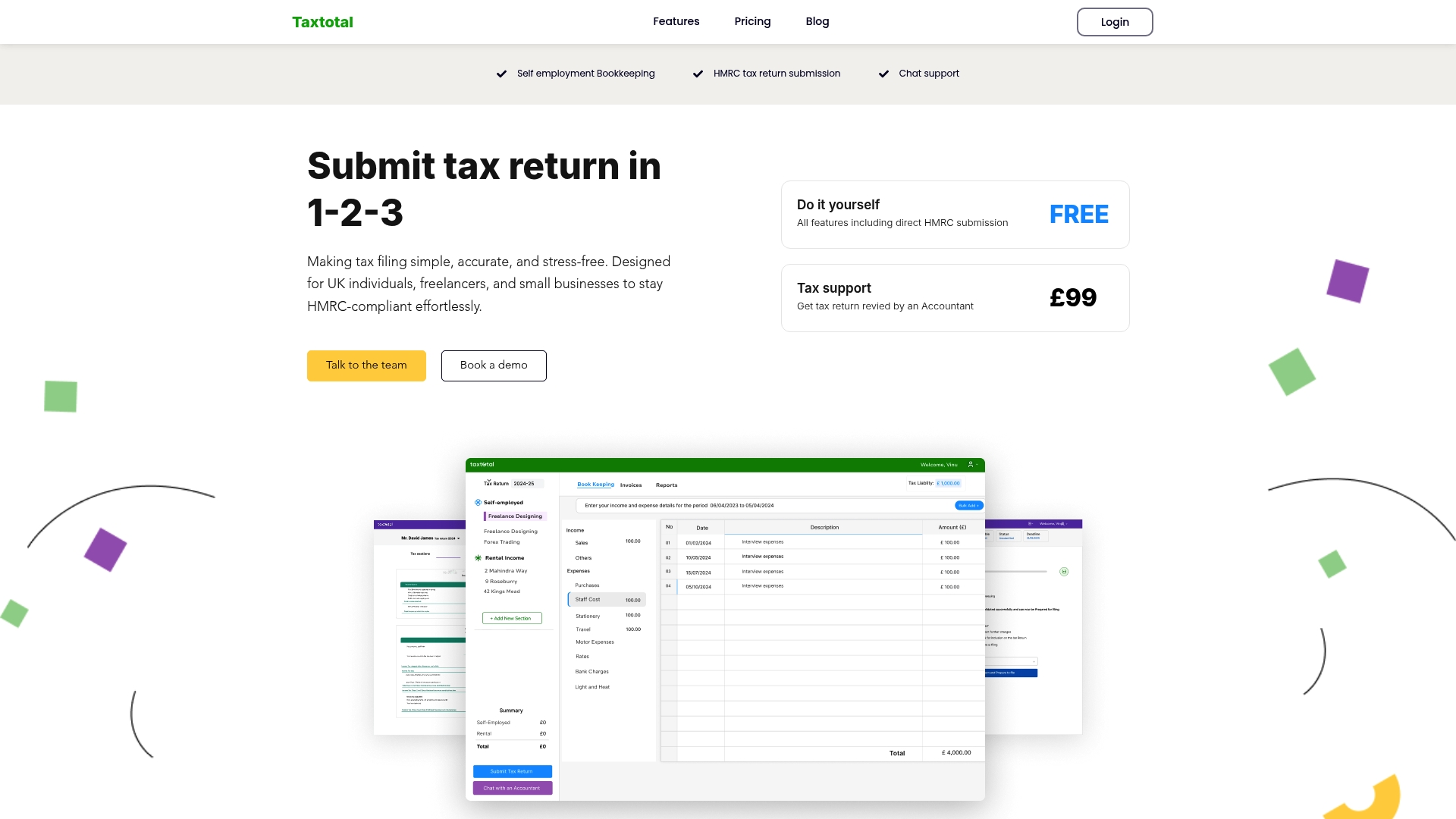
Don’t let tax season cause stress or costly mistakes. Visit Taxtotal.co.uk today and start managing your Self Assessment tax return with simplicity and professional support. Take the first step towards effortless tax success now.
Frequently Asked Questions
What records should I gather for my Self Assessment tax return?
To prepare effectively, collect all income and expense records, including bank statements, invoices, receipts, and payment records. Organise these documents chronologically to simplify your tax submission process.
How can I identify allowable expenses for my Self Assessment?
You can identify allowable expenses by reviewing costs directly related to running your business, such as office supplies, travel costs, and professional fees. Keep detailed records and receipts for each expense to substantiate your claims during the tax submission.
What digital tools can help me manage my finances for Self Assessment?
Consider using digital finance tracking tools that offer features like automatic bank transaction synchronisation, expense categorisation, and real-time reporting. These tools streamline your record-keeping and can significantly reduce the manual effort involved.
How can I avoid common mistakes when submitting my Self Assessment tax return?
To avoid mistakes, thoroughly review your personal details, income totals, and expense calculations before submission. Create a checklist to ensure all fields are completed accurately and consider using software that automatically checks for errors.
What are the key deadlines I should track for my Self Assessment?
Important deadlines include registering for Self Assessment by 5 October, submitting paper returns by 31 October, and online returns by 31 January. Set reminders well in advance to help you manage these dates effectively.
When should I consider a professional review of my tax return?
Consider scheduling a professional review at least two weeks before your submission deadline to identify any potential errors or deductions. A professional can help ensure compliance with tax regulations and enhance your confidence in the accuracy of your submission.