
Staring at a mess of receipts and invoices can make Self Assessment feel impossible for many self-employed professionals across the United Kingdom. Tax returns are more than a formality—they affect your cash flow, peace of mind, and standing with HMRC. Understanding the importance of meticulous record-keeping and claiming the right expenses, you need a straightforward way to organise documents, calculate taxes, and meet all deadlines with confidence.
Table of Contents
- Step 1: Gather Essential Financial Records
- Step 2: Identify Allowable Expenses And Reliefs
- Step 3: Calculate Taxable Profit Accurately
- Step 4: Utilise Digital Tools For Tax Filing
- Step 5: Verify Submission And Monitor Deadlines
Quick Summary
| Key Point | Explanation |
|---|---|
| 1. Maintain organised financial records | Collect and digitise all essential documents like income statements, expense receipts, and bank statements for accurate tax reporting. |
| 2. Understand allowable tax deductions | Claim eligible business expenses to reduce tax liability, such as office supplies and professional memberships, while keeping meticulous records. |
| 3. Accurately calculate taxable profit | Subtract allowable expenses from total income to determine taxable profit, ensuring all supporting documents are retained for verification. |
| 4. Utilise digital tools for filing | Embrace online platforms and software for tax preparation to enhance accuracy, save time, and ensure proper documentation management. |
| 5. Monitor submission deadlines diligently | Keep track of key tax deadlines and verify submission details to avoid penalties, using alerts and digital reminders to stay organised. |
Step 1: Gather Essential Financial Records
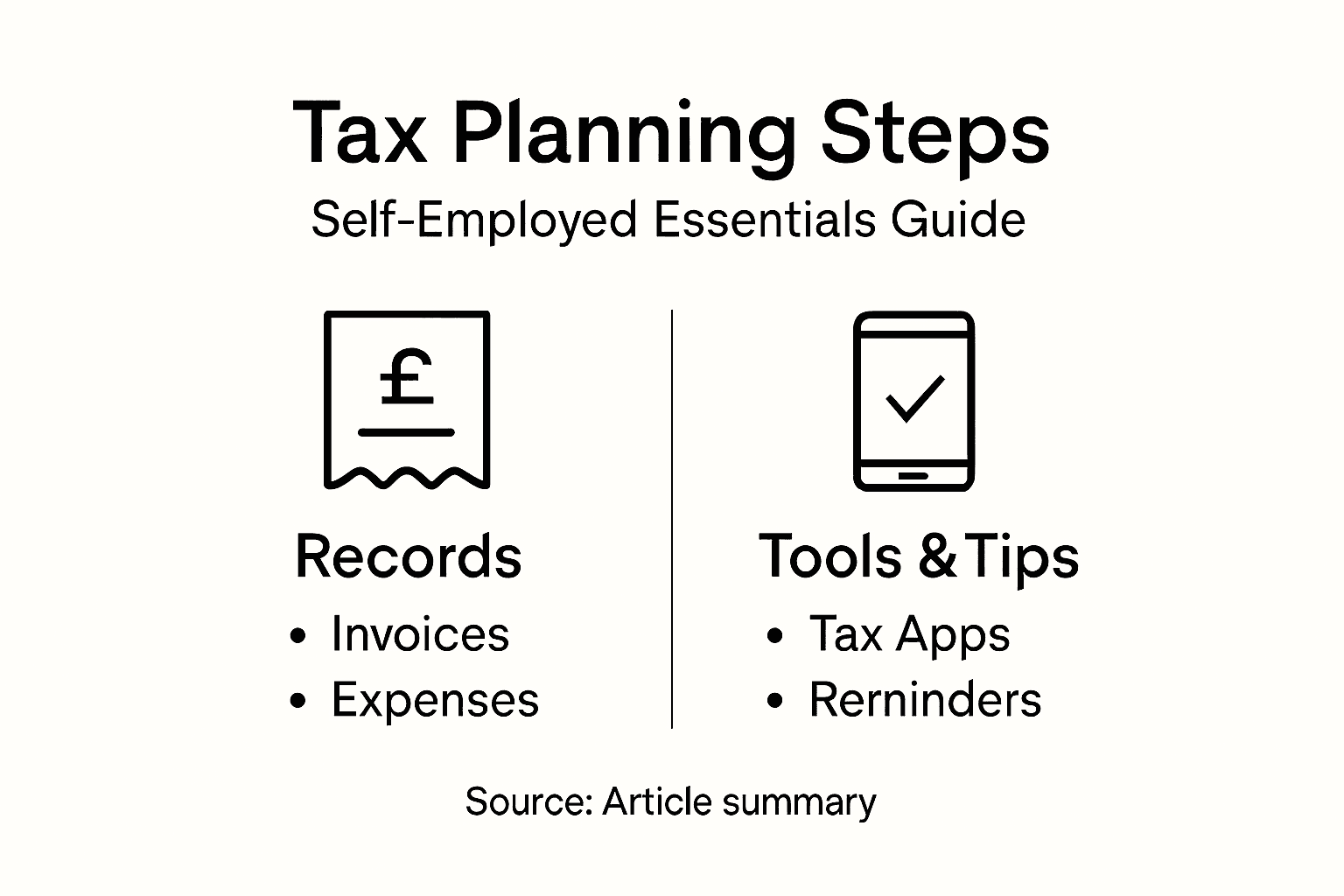
Self-employed professionals must meticulously collect and organise their financial documentation to ensure accurate tax reporting and smooth interactions with HMRC. Proper record-keeping isn’t just about compliance – it’s about understanding your business’s financial health and preparing for potential future audits.
The foundation of robust tax preparation involves collecting several critical documents. Start by gathering these essential financial records:
- Income documentation
- Bank statements showing all business transactions
- Sales invoices and payment receipts
- Client contracts and payment records
- Expense receipts and records
- Bank account statements for business accounts
- Credit card statements related to business expenses
When collecting your records, the IRS recommends maintaining comprehensive documentation that substantiates every financial transaction. This means keeping not just summaries, but actual supporting documents like sales slips, paid bills, invoices, and cancelled cheques.
Digitising these documents can significantly streamline your record-keeping process. Consider scanning physical receipts and storing them electronically, ensuring you have backup copies and easy access during tax preparation. Many accounting software platforms offer integrated receipt scanning and storage features, making organisation simpler.
Consistent, organised record-keeping reduces stress during tax season and provides a clear financial snapshot of your business performance.
Top tip: Create a dedicated folder – physical or digital – and consistently file documents immediately after receiving them to prevent last-minute scrambling during tax season.
Step 2: Identify Allowable Expenses and Reliefs
As a self-employed professional, understanding and claiming the right expenses can significantly reduce your tax liability and improve your financial position. Navigating the complex landscape of tax deductions requires careful attention to detail and a strategic approach to documenting your business expenditures.
Self-employed individuals can deduct a wide range of ordinary and necessary business expenses, including:
- Office supplies and equipment
- Professional subscriptions and memberships
- Computer hardware and software
- Marketing and advertising costs
- Professional development and training
- Business travel and transportation expenses
- Home office running costs
- Communication expenses (phone, internet)
The Freelancers Union highlights specific deductions that can substantially reduce your tax burden. For instance, you might be eligible to claim deductions for health insurance premiums, retirement contributions, and vehicle use related to your business activities.
Tax deductions are not just about reducing your current tax bill – they’re about strategic financial planning for your business’s future.
When claiming expenses, meticulous record-keeping is paramount. Retain all receipts, invoices, and documentation to substantiate your claims. Some expenses might require specific calculation methods, such as home office deductions which can be calculated using simplified or regular methods.
Compare deduction calculation methods for home office expenses:
| Method | Calculation Approach | Best For |
|---|---|---|
| Simplified | Fixed rate per square metre | Small workspaces, less paperwork |
| Regular | Actual costs, detailed records | Large spaces, maximum deduction |
Top tip: Consider consulting a tax professional who specialises in self-employment to ensure you’re maximising your available tax reliefs and avoiding potential compliance issues.
Step 3: Calculate Taxable Profit Accurately
Calculating your taxable profit is a critical step in managing your self-employment finances, requiring precision and a thorough understanding of how income and expenses interact. This process determines not only your tax liability but also provides a clear snapshot of your business’s financial health.
To calculate your taxable profit, you’ll need to follow these key steps:
- Determine your total business income
- List and total all allowable business expenses
- Subtract business expenses from total income
- Consider potential tax reliefs and deductions
- Account for any capital allowances
The National Association for the Self-Employed explains that self-employment tax applies to your net earnings, which means you’ll be responsible for calculating both the employer and employee portions of your tax contributions.
Accurate profit calculation is more than a tax requirement – it’s a fundamental tool for understanding your business’s financial performance.
When calculating your taxable profit, remember that some expenses might have specific rules for deduction. Keep detailed records of all income and expenditures, including receipts, invoices, and bank statements. If your expected tax liability exceeds £1,000, you’ll likely need to make advance quarterly tax payments.

Top tip: Create a dedicated spreadsheet or use accounting software to track your income and expenses throughout the year, making the final profit calculation significantly easier and more accurate.
Step 4: Utilise Digital Tools for Tax Filing
Modern digital technologies have transformed tax filing for self-employed professionals, offering streamlined solutions that simplify complex reporting requirements. Embracing these digital tools can save you time, reduce errors, and ensure more accurate financial reporting to HMRC.
Key digital tools for efficient tax filing include:
- Online tax preparation platforms
- Digital accounting software
- Expense tracking applications
- Cloud-based document storage systems
- Automated receipt scanning tools
- Income recording spreadsheets
The IRS recommends leveraging digital filing services to improve accuracy and processing speed for tax submissions. Digital tools offer several significant advantages over traditional paper-based methods, including instant calculations, real-time error checking, and seamless record maintenance.
Digital tax tools are not just conveniences – they’re powerful allies in maintaining precise financial documentation.
When selecting digital tax tools, prioritise platforms that integrate easily with your existing financial systems. Look for solutions that offer secure data storage, automatic backup, and compatibility with HMRC’s digital reporting requirements. Many modern platforms provide features like automatic expense categorisation, income tracking, and direct submission capabilities.
Here’s a quick overview of common digital tools and their impacts for self-employed tax filing:
| Digital Tool Type | Main Function | Business Impact |
|---|---|---|
| Tax preparation platforms | File tax returns online | Simplifies submissions |
| Accounting software | Track income, expenses | Boosts accuracy, saves time |
| Expense tracking apps | Monitor day-to-day spending | Prevents missed deductions |
| Cloud document storage | Securely store documents | Enables instant access |
| Receipt scanning solutions | Digitise paper receipts | Reduces manual entry |
Top tip: Choose digital tax tools with multi-platform accessibility, ensuring you can manage your tax documentation from your computer, tablet, or smartphone.
Step 5: Verify Submission and Monitor Deadlines
The final stage of tax preparation demands meticulous attention to submission verification and strict deadline monitoring. Self-employed professionals must ensure their tax returns are accurately filed and track critical payment dates to maintain compliance with HMRC requirements.
Key actions for effective submission verification include:
- Double-check all entered information
- Confirm submission acknowledgement
- Review digital confirmation emails
- Save submission receipts
- Mark important tax deadlines in your calendar
- Verify bank details for potential refunds
The IRS recommends comprehensive return verification to prevent potential processing errors and ensure smooth tax submissions. This involves carefully reviewing every section of your tax return before final submission and maintaining copies of all documentation.
Proactive deadline monitoring is your best defence against unexpected penalties and financial complications.
Establish a systematic approach to tracking tax obligations. For self-employed individuals, this typically means monitoring quarterly estimated tax payments and the annual Self Assessment deadline. Set digital reminders, utilise calendar alerts, and consider creating a dedicated spreadsheet to track these critical financial milestones.
Top tip: Create a digital tax calendar with colour-coded alerts for different tax deadlines, ensuring you never miss an important submission or payment date.
Simplify Your Self-Employment Tax Planning with Taxtotal
Navigating the complexities of tax planning as a self-employed individual can feel overwhelming. From gathering essential financial records to accurately calculating your taxable profit and meeting strict submission deadlines every step requires careful attention and time. At Taxtotal, we understand these challenges and help you take control with tools designed specifically for self-employed professionals. Whether you need real-time tax calculations, detailed expense tracking, or seamless filing support, our platform guides you confidently through the process to reduce stress and ensure compliance.
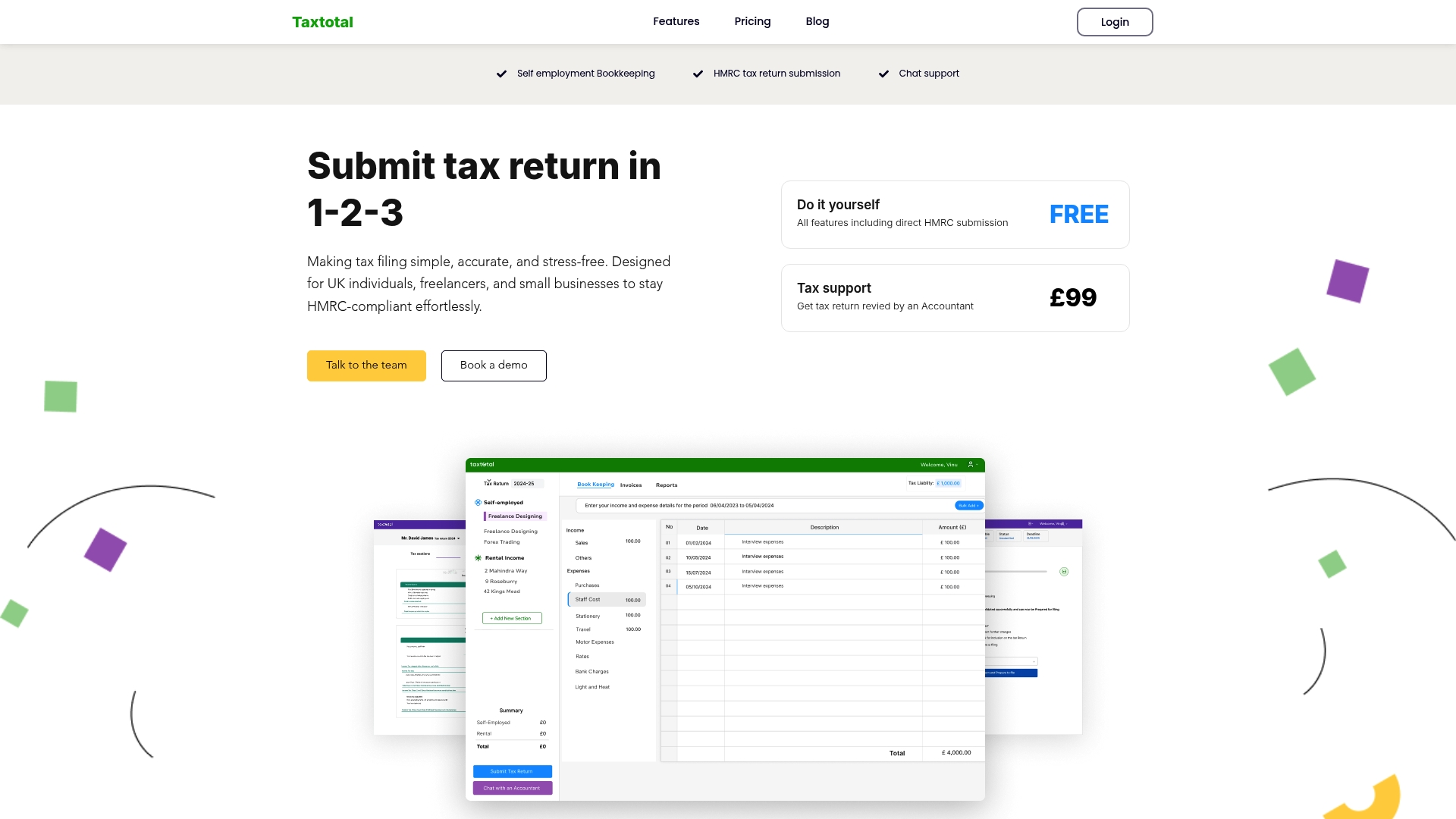
Ready to transform your approach to tax management? Visit Taxtotal and explore our comprehensive Tax Support – Taxtotal resources alongside practical solutions in Accounting – Taxtotal. Start managing your tax obligations with simplicity and accuracy today and avoid costly mistakes before the next deadline arrives.
Frequently Asked Questions
What are the essential financial records I need to gather for tax planning as a self-employed professional?
To prepare for tax filing, you should collect items such as income documentation, bank statements, sales invoices, client contracts, and receipts for expenses. Begin by organising these documents into dedicated folders, both physical and digital, for easy access during tax season.
How can I accurately calculate my taxable profit as a self-employed individual?
To determine your taxable profit, total your business income, subtract allowable expenses, and account for any tax reliefs. Create a spreadsheet to track these figures throughout the year to ensure an accurate calculation when tax time arrives.
What types of expenses can I deduct as a self-employed professional?
You can deduct ordinary and necessary expenses, including office supplies, professional memberships, marketing costs, and home office expenses. Make a detailed list of these deductions to reduce your overall tax liability effectively.
What digital tools should I utilise for efficient tax filing?
Consider using online tax preparation platforms, digital accounting software, and expense tracking applications to streamline your filing process. Evaluate various options to determine which tools best fit your financial systems and needs, making sure they comply with necessary reporting requirements.
How can I stay organised and meet tax deadlines effectively?
To manage tax deadlines, double-check your submission details, save receipts, and mark important dates in your calendar. Set reminders well in advance, allowing yourself time to address any potential issues before submitting your tax return.