
Sorting through receipts and invoices at the end of the tax year can feel overwhelming for many UK freelancers and sole traders. The official HMRC Submission Process requires you to systematically report all untaxed income through a Self Assessment tax return, and missing deadlines can trigger penalties and interest. Understanding Self Assessment tax return requirements will help you avoid common mistakes and approach the process with confidence.
Table of Contents
- What Is The HMRC Submission Process?
- Who Must Submit Self Assessment Returns
- Key Steps In Submitting Online
- Essential Deadlines And Penalties
- Common Pitfalls And How To Avoid Them
Key Takeaways
| Point | Details |
|---|---|
| Understanding Registration | Freelancers must register for Self Assessment by 5 October following the tax year end to comply with HMRC regulations. |
| Accurate Record Keeping | Maintaining detailed financial records is essential for at least five years to support tax calculations and submissions. |
| Timely Submission | Submit online tax returns by 31 January to avoid penalties, with an initial £100 fine for late submissions. |
| Avoiding Common Mistakes | Proactively address pitfalls such as late registration and incomplete information to ensure accurate tax reporting and compliance. |
What Is The HMRC Submission Process?
The HMRC Submission Process is the official system used by HM Revenue and Customs to collect Income Tax from individuals and businesses with additional income sources beyond standard employment wages. For freelancers and self-employed professionals, this process involves systematically reporting all taxable earnings through a Self Assessment tax return.
The submission process typically follows several key stages:
- Registration: Creating a Government Gateway account
- Record Keeping: Maintaining accurate financial documentation
- Online Submission: Filing tax returns electronically via HMRC’s online services
- Payment: Settling any outstanding tax owed
For UK freelancers, understanding these stages is crucial. Unlike traditional employees who have taxes automatically deducted, self-employed individuals must proactively manage their tax reporting. The process requires obtaining a Unique Taxpayer Reference (UTR) and submitting comprehensive financial information that details income, expenses, and potential tax liabilities.
Key Requirements for Submission:
- Register for Self Assessment before 5 October following the tax year end
- Keep detailed financial records for at least 5 years
- Complete and submit your tax return by specified deadlines
- Calculate and pay any tax owed
Accurate and timely submission is essential to avoid potential penalties and ensure compliance with HMRC regulations.
Pro tip: Start preparing your tax documentation early and consider using digital record-keeping tools to streamline the HMRC submission process.
Who Must Submit Self Assessment Returns
The Self Assessment tax return is a crucial requirement for numerous UK professionals who earn income outside standard employment. Individuals with untaxed income must register and submit their financial details to HMRC annually, encompassing a wide range of professional categories.
Specifically, the following groups are typically required to complete a Self Assessment return:
- Freelancers and sole traders earning over £1,000 annually
- Company directors not on standard PAYE arrangements
- Landlords receiving rental income
- High-income individuals with complex tax situations
- Self-employed professionals generating additional income
- Individuals with investment earnings exceeding tax-free allowances
The requirement to submit a Self Assessment return is not solely determined by income level, but also by the nature and source of earnings. HMRC mandates these submissions to ensure accurate tax collection and prevent potential tax evasion.
Key Circumstances Triggering Self Assessment:
- Self-employment income exceeding £1,000 per year
- Untaxed income from savings, investments, or dividends
- Rental property income
- Income from overseas sources
- Capital gains from asset sales
HMRC typically contacts individuals who are required to submit a tax return, but the ultimate responsibility lies with the taxpayer to register and file on time.
Pro tip: Keep comprehensive financial records throughout the year to simplify your Self Assessment submission process and reduce potential stress during tax season.
Key Steps In Submitting Online
Submitting a Self Assessment tax return online requires careful preparation and understanding of HMRC’s digital submission requirements. Making Tax Digital (MTD) has transformed the traditional approach, introducing more streamlined digital reporting mechanisms for UK freelancers and self-employed professionals.
The online submission process involves several critical stages:
- Registration: Obtaining a Government Gateway account
- Documentation: Gathering financial records and income statements
- Software Selection: Choosing HMRC-approved accounting software
- Data Entry: Inputting comprehensive financial information
- Review: Checking all details for accuracy
- Submission: Electronically filing the tax return
Each stage demands precision and attention to detail. Freelancers must ensure they have their Unique Taxpayer Reference (UTR) ready and maintain meticulous digital records throughout the financial year. The online platform requires comprehensive information about income, expenses, and potential tax deductions.
Detailed Online Submission Sequence:
- Create Government Gateway login
- Verify personal and business identification details
- Collate financial documentation
- Enter income and expense information
- Calculate tax liability
- Review and submit electronically
Digital submissions offer greater accuracy and faster processing compared to traditional paper-based tax returns.
Pro tip: Invest in cloud-based accounting software that automatically tracks and categorises your financial transactions to simplify your online tax submission process.

The following table compares HMRC-approved accounting software with non-approved solutions for freelancers managing tax returns:
| Criteria | HMRC-Approved Software | Non-Approved Solutions |
|---|---|---|
| Security Standards | Compliant and reliable | Potential data vulnerabilities |
| Accuracy of Calculations | Automatic updates for regulations | Possible tax errors |
| Integration with HMRC | Direct electronic submission | Manual paperwork required |
| Support Availability | Dedicated for tax returns | Generic or limited assistance |
Essential Deadlines And Penalties
Managing Self Assessment tax returns requires strict adherence to HMRC’s critical timelines. Late filing can trigger substantial penalties, making it crucial for freelancers to understand and respect these mandatory deadlines.
The key deadlines for Self Assessment submissions include:
- October 5th: Notify HMRC about needing to file a tax return
- October 31st: Deadline for paper tax return submission
- January 31st: Online tax return and payment deadline
- 31st January following tax year end: Final date for paying tax owed
HMRC implements a progressive penalty system for missed deadlines, which escalates the longer taxpayers delay their obligations. The initial penalty for late submission is a £100 fixed fine, with additional charges accumulating for extended delays.
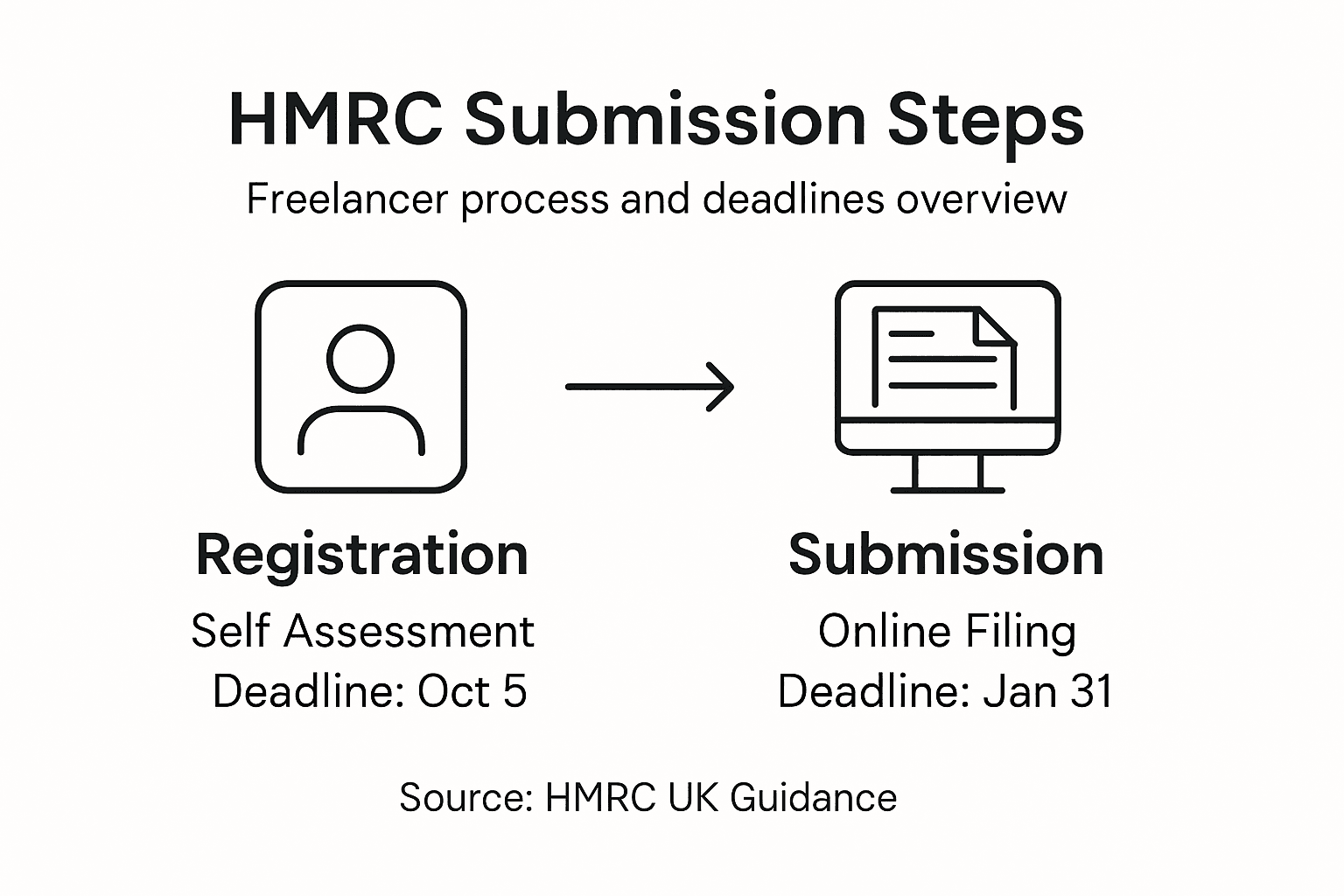
Here is a concise overview of how HMRC deadlines relate to penalties for late Self Assessment returns:
| Deadline Missed | Initial Penalty | Further Action | Long-Term Consequences |
|---|---|---|---|
| Submission by 31 Jan | £100 fixed fine | Daily charges after 3 months | Legal proceedings after 12 months |
| Payment by 31 Jan | Interest charged | Additional surcharges | Growing financial liabilities |
| Paper deadline (31 Oct) | No digital filing allowed | Forced to file online | Increased risk of errors |
Penalty Breakdown for Late Submissions:
- Immediate £100 fine after January 31st deadline
- Additional daily penalties after 3 months
- Further substantial penalties after 6 months
- Potential legal proceedings after 12 months of non-compliance
Consistently missing tax deadlines can result in cumulative financial penalties that far exceed the original tax liability.
Pro tip: Set multiple digital reminders at least two months before each HMRC deadline to ensure timely preparation and submission of your tax return.
Common Pitfalls And How To Avoid Them
Freelancers navigating the Self Assessment tax return process often encounter numerous potential missteps that can complicate their financial reporting. Common mistakes can significantly impact tax compliance, making it crucial to understand and preemptively address potential issues.
The most frequent pitfalls freelancers experience include:
- Late Registration: Failing to notify HMRC in time
- Poor Record Keeping: Inadequate financial documentation
- Missed Expenses: Overlooking claimable business costs
- Incomplete Information: Submitting incorrect or partial details
- Software Selection: Using non-HMRC approved accounting tools
- Deadline Ignorance: Misunderstanding critical submission dates
Each pitfall represents a potential risk to your financial health and tax compliance. Freelancers must be meticulous in their approach, ensuring comprehensive and accurate reporting of all financial activities. Understanding these common errors can help prevent costly mistakes and potential penalties.
Strategic Approach to Avoiding Pitfalls:
- Register with HMRC promptly
- Maintain detailed digital financial records
- Use HMRC-approved accounting software
- Track all business-related expenses
- Double-check all entries before submission
- Seek professional advice when uncertain
Proactive preparation and attention to detail are the most effective defences against Self Assessment submission errors.
Pro tip: Create a dedicated digital folder where you immediately save all financial documents throughout the year to simplify your tax return preparation.
Simplify Your HMRC Submission Process Today
Managing the HMRC submission process can be daunting, especially with strict deadlines and the need for meticulous record keeping highlighted in the article. Many freelancers struggle with accurate tax reporting, understanding Self Assessment requirements, and avoiding costly penalties. If you want to take control of your tax affairs without the stress of confusing forms and potential mistakes, you need straightforward solutions that put you in charge.
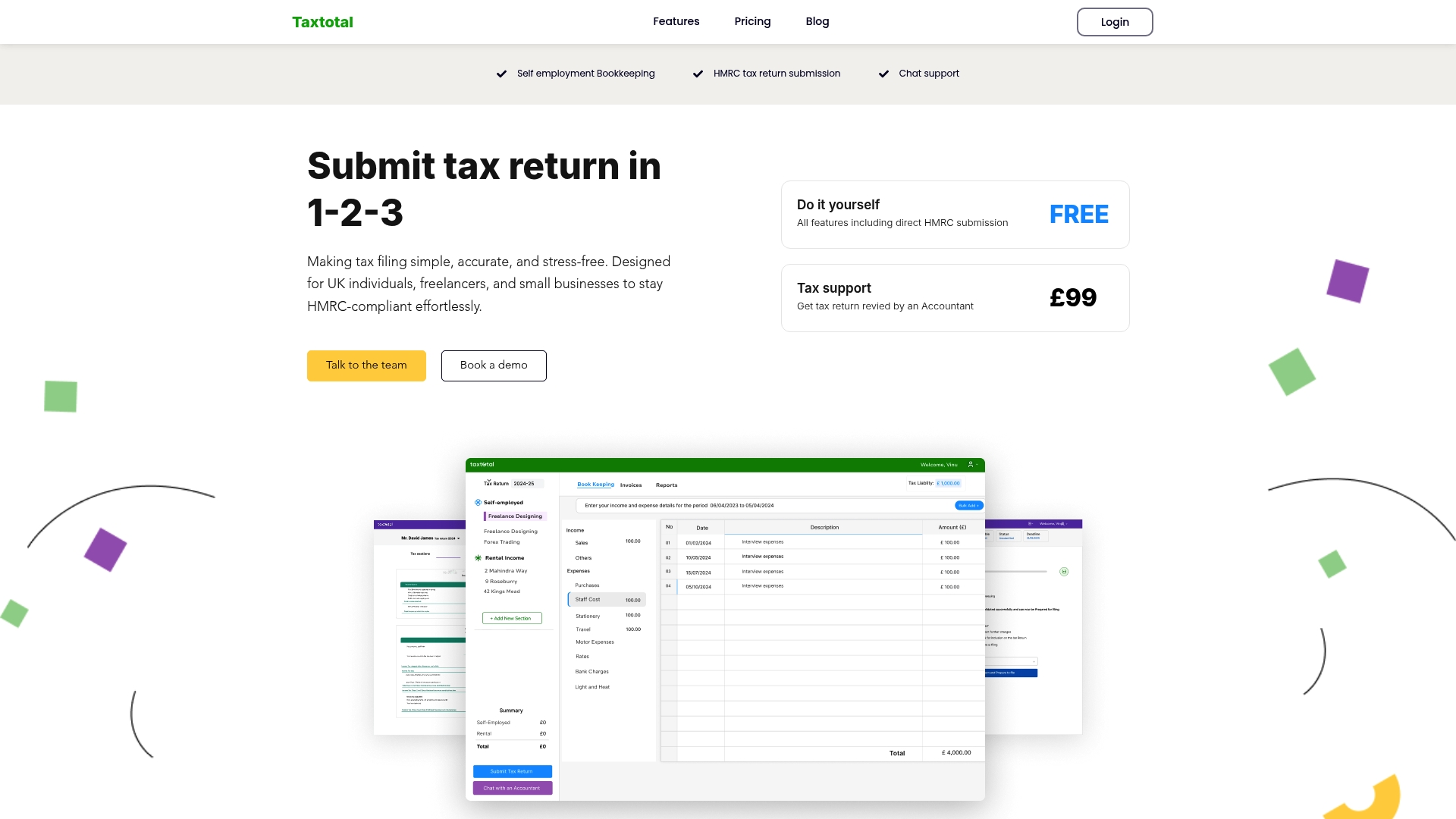
Discover how Taxtotal.co.uk empowers UK freelancers and self-employed professionals with a clear, user-friendly platform that guides you through every step of your Self Assessment tax return. From real-time tax calculations to error checking and direct filing to HMRC, our tools are designed for simplicity and accuracy. To learn more about managing your tax obligations with expert support, explore our dedicated Tax Support – Taxtotal and seamless Accounting – Taxtotal services. Take the first step towards stress-free tax submissions by visiting Taxtotal.co.uk now and streamline your tax journey with confidence.
Frequently Asked Questions
What is the HMRC Submission Process for freelancers?
The HMRC Submission Process involves registering for Self Assessment, maintaining accurate financial records, completing an online tax return, and paying any taxes owed. Freelancers must report all taxable earnings from their self-employment activities.
Who needs to submit a Self Assessment tax return?
Freelancers, sole traders earning over £1,000 annually, company directors not on PAYE, landlords, high-income individuals, and those with untaxed income must submit a Self Assessment tax return.
What are the essential deadlines for HMRC Self Assessment submissions?
Key deadlines include notifying HMRC by October 5th, submitting paper returns by October 31st, filing online returns and making payments by January 31st following the tax year end.
How can freelancers avoid common pitfalls when submitting their tax returns?
Freelancers can avoid pitfalls by registering with HMRC on time, maintaining detailed financial records, using HMRC-approved software, tracking all claimable expenses, and checking all details before submission.