
Sorting out tax paperwork can feel stressful for many freelancers and sole traders in the United Kingdom. Missing a single invoice or expense receipt could mean losing out on valuable reliefs or risking HMRC penalties. With so many details to gather and check, a clear method makes the Self Assessment process much less daunting. This step-by-step guide focuses on meticulously collecting and organising your financial records so you can get every detail right and avoid costly mistakes.
Table of Contents
- Step 1: Gather Essential Financial Records
- Step 2: Organise Income And Allowable Expenses
- Step 3: Input Details Into Your Tax Platform
- Step 4: Review Entries For Accuracy And Compliance
- Step 5: Finalise And Save Your Tax Documents
Quick Summary
| Essential Insight | Clarification |
|---|---|
| 1. Gather all financial records | Collect bank statements, income documentation, and expense receipts to ensure a thorough tax return preparation. |
| 2. Organise income and expenses systematically | Create separate accounts and a digital filing system to facilitate easy tracking and maximisation of deductions. |
| 3. Double-check entries in tax platform | Meticulously verify all numerical and income source entries to prevent mistakes and ensure accurate deductions. |
| 4. Conduct a thorough review | Cross-reference with financial documents to validate totals and confirm compliance with HMRC regulations. |
| 5. Securely finalise and save documents | Digitally backup and securely store all tax records to simplify future preparations and protect against inquiries. |
Step 1: Gather essential financial records
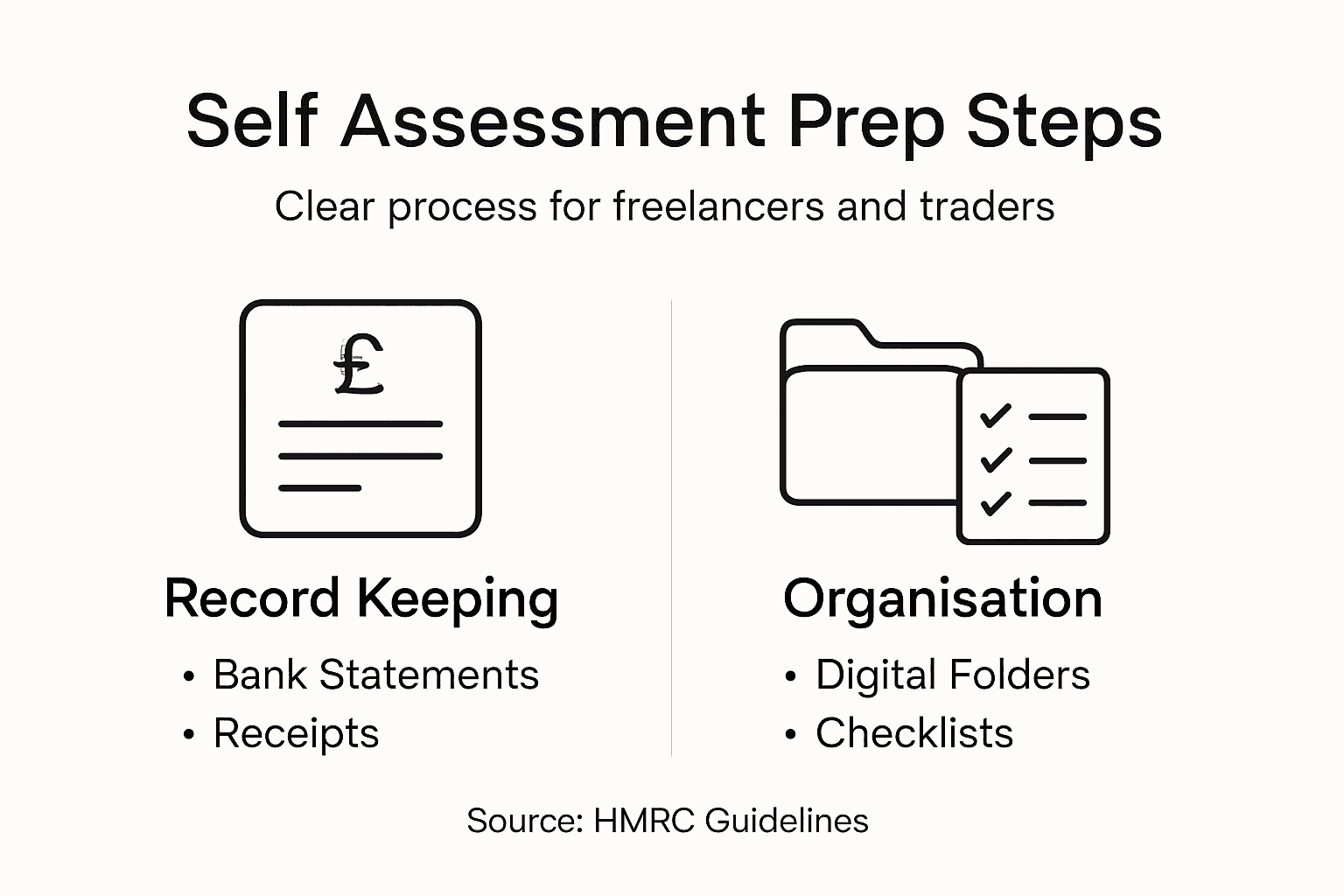
Preparing your Self Assessment tax documents begins with meticulously collecting and organising your financial records. The success of your tax return hinges on having comprehensive documentation that accurately reflects your income, expenses, and financial activities for the tax year.
To build a robust financial record collection, focus on gathering key documents systematically. These should include:
- Bank statements covering all business and personal accounts
- Income documentation such as invoices, contracts, and payment records
- Expense receipts for business-related purchases and operational costs
- VAT records if you are VAT registered
- Proof of income from all sources including self-employment, investments, and rental income
HMRC recommends maintaining detailed tax records for at least six years, which means being thorough now can save significant stress later. Digital storage solutions can help you keep these documents organised and easily accessible.
Here is a summary of digital versus paper tax record-keeping approaches to inform your document organisation strategy:
| Record-Keeping Method | Advantages | Disadvantages |
|---|---|---|
| Digital Storage | Easily searchable and accessible | Security risks if not encrypted |
| Paper Files | Useful for original documents | Prone to physical loss or damage |
| Cloud Solutions | Access from any location | Requires reliable internet access |
| External Drives | Good backup capacity | Can be lost or corrupted |
Tip: Consistency is key when collecting financial records. Set up a dedicated system for tracking and storing documents throughout the tax year.
Expert recommendation: Create a digital folder system with clear monthly subfolders to make future tax preparation dramatically smoother.
Step 2: Organise income and allowable expenses
Organising your income and allowable expenses is a critical step in preparing an accurate Self Assessment tax return. Your goal is to create a systematic approach that not only meets HMRC requirements but also maximises potential tax deductions and simplifies your financial record-keeping.
To effectively organise financial documentation, develop a robust categorisation system for your income and expenses. This involves:
- Separate accounts for business and personal finances
- Digital filing system with clear monthly folders
- Detailed expense tracking including:
- Office supplies
- Travel and transportation costs
- Equipment and technology purchases
- Professional subscription fees
- Utility bills related to business operations
Accurate expense categorisation can significantly reduce your tax liability and prevent potential issues during HMRC assessments.
Consider using accounting software or spreadsheets to help track and categorise your financial records systematically. This approach ensures you capture every eligible business expense and maintain a clear audit trail.

Expert recommendation: Scan and digitise all paper receipts immediately to create a comprehensive and easily searchable financial record system.
Step 3: Input details into your tax platform
Inputting your financial details into a tax platform requires precision and careful attention to ensure an accurate Self Assessment submission. This step transforms your meticulously organised financial records into a comprehensive tax return that reflects your true financial position.
When entering your information, follow these critical steps:
- Double-check all numerical entries
- Verify income sources including:
- Self-employment earnings
- Employment income
- Investment returns
- Rental income
- Confirm expense categories
- Review personal allowance details
Accuracy at this stage prevents potential complications with HMRC and ensures you claim all eligible deductions.
Pay special attention to each section of the tax platform, ensuring you input data precisely as it appears in your financial documents. Simple tax preparation strategies can help you navigate this potentially complex process with confidence.
Make sure to cross-reference your entries with your original financial records, checking for any discrepancies or missing information before final submission.
Expert recommendation: Complete your tax return in multiple shorter sessions to maintain focus and reduce the likelihood of errors.
Step 4: Review entries for accuracy and compliance
Reviewing your Self Assessment tax return is the crucial final checkpoint before submission, ensuring every detail is precise and compliant with HMRC regulations. Your meticulous review can prevent potential penalties and help you maximise legitimate tax allowances.
To conduct a comprehensive review, follow these systematic steps:
- Cross-reference financial documents
- Verify income totals across:
- Bank statements
- Invoice records
- Payment receipts
- Check expense calculations
- Confirm personal allowance claims
- Validate tax code accuracy
Precision during review can save you significant time and potential financial complications later.
Self Assessment compliance strategies recommend a methodical approach to reviewing your tax return. Pay special attention to numerical entries, ensuring they match your original financial documentation exactly.
Consider using digital tools or spreadsheet comparisons to highlight any discrepancies, and be prepared to make corrections before final submission.
Below is a quick comparison of key review and compliance tools for your Self Assessment process:
| Tool Type | Purpose | Benefit |
|---|---|---|
| Accounting Software | Automated data checks | Reduces manual error risk |
| Spreadsheets | Custom calculation validation | Tracks discrepancies easily |
| HMRC Online Portal | Real-time validation prompts | Immediate submission feedback |
Expert recommendation: Create a separate checklist for your review process, treating it as a final professional audit of your financial information.
Step 5: Finalise and save your tax documents
Completely your Self Assessment tax return involves more than just submitting your information – it requires careful document management and secure record preservation. This final stage ensures you meet HMRC’s legal requirements and protect yourself against potential future inquiries.
Your document finalisation process should include:
- Create digital backups of all tax documents
- Organise files with clear naming conventions
- Store physical copies in secure location
- Maintain records for minimum five years
- Encrypt sensitive digital files
Proper document management protects your financial history and simplifies future tax preparations.
Tax document retention guidelines recommend systematic archiving of all financial records. Save multiple copies across different storage platforms, including cloud storage and external hard drives, to ensure comprehensive backup.
Ensure your saved documents are easily retrievable, well-organised, and protected from potential data loss or security breaches.
Expert recommendation: Create a dedicated tax records folder with subfolders for each tax year, making future reference straightforward and efficient.
Simplify Your Self Assessment Tax Preparation Today
Preparing tax documents for Self Assessment can feel overwhelming, especially when managing detailed financial records and ensuring accuracy to meet HMRC requirements. Whether you struggle with organising income and expenses or worry about inputting data correctly, these challenges can cause stress and risk costly errors. The good news is that you don’t have to face these complexities alone.
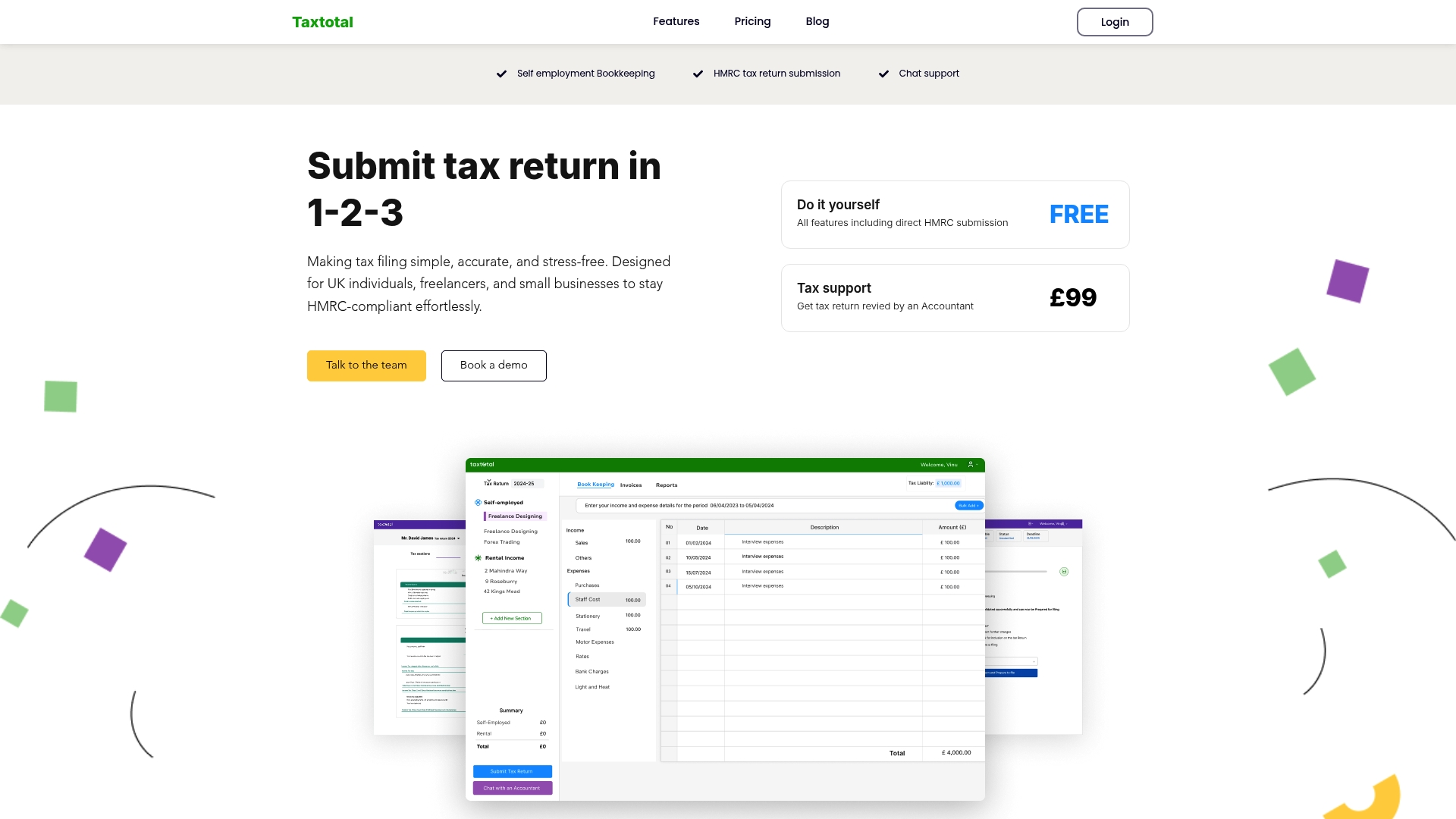
Taxtotal.co.uk offers a user-friendly solution designed specifically for freelancers, sole traders, and small business owners dealing with Self Assessment taxes. With features like real-time tax calculations, error checking, and direct HMRC submission, you can confidently prepare and review your tax return without needing expert accounting knowledge. Discover how our Accounting – Taxtotal tools simplify your financial organisation and gain peace of mind with our dedicated Tax Support – Taxtotal services.
Take control of your Self Assessment process now to avoid last-minute panic and costly mistakes. Visit Taxtotal.co.uk and experience how easy tax preparation can be when you have the right platform supporting you every step of the way.
Frequently Asked Questions
What financial records do I need to gather for my Self Assessment tax return?
To prepare your Self Assessment tax documents, gather key financial records such as bank statements, income documentation like invoices, and expense receipts for all business-related purchases. Aim to create a comprehensive collection by systematically organising these documents throughout the year.
How should I organise my income and expenses for Self Assessment?
Organise your income and expenses by establishing separate accounts for business and personal finances, along with a digital filing system featuring clear monthly folders. Create a detailed tracking system to effectively categorise expenses, helping maximise your potential tax deductions and simplifying your record-keeping.
What steps should I take when inputting details into my tax platform?
When inputting details into your tax platform, ensure precision and double-check all numerical entries, including income sources and expense categories. Review each section of your tax platform carefully to prevent discrepancies and ensure you are claiming all eligible deductions before final submission.
How can I review my Self Assessment tax return for accuracy?
To review your Self Assessment tax return accurately, cross-reference your financial documents, verifying income totals and checking expense calculations. Double-check everything against your original financial records to catch any potential errors and ensure compliance with regulations.
What should I do after finalising my tax documents?
After finalising your tax documents, create digital backups and organise files with clear naming conventions for easy retrieval. Ensure that you maintain records for a minimum of five years, storing both digital and physical copies securely, to protect yourself against potential future inquiries.