
Facing the annual Self Assessment deadline can feel overwhelming for British freelancers and sole traders juggling client work and admin. Understanding what HMRC expects matters because accurate filing protects your financial record and ensures you claim every allowable deduction. This practical guide helps you steer clear of costly penalties, break down key filing requirements, and identify legitimate business expenses, letting you manage your tax return with confidence.
Table of Contents
- Self Assessment Explained for the Self-Employed
- Who Must File and Recent Digital Changes
- Legal Obligations and Filing Deadlines
- Risks of Late or Incorrect Returns
- Financial Benefits and Claimable Deductions
Key Takeaways
| Point | Details |
|---|---|
| Self Assessment Filing Requirements | Self Assessment must be filed if self-employment profit exceeds £1,000 or if notified by HMRC, otherwise voluntary filing can reclaim overpaid tax. |
| Deadline Importance | The deadline for filing Self Assessment is 31st January; late submissions incur immediate penalties. |
| Transition to Making Tax Digital | From April 2026, self-employed individuals earning over £50,000 must submit quarterly digital records, changing how tax reporting occurs. |
| Claimable Deductions | Self-employed individuals can claim numerous deductions to reduce taxable income, enhancing potential tax savings significantly. |
Self Assessment Explained for the Self-Employed
Self Assessment is the system HMRC uses to collect income tax from self-employed people, freelancers, and sole traders. If you work for yourself, this is how you tell HMRC how much you’ve earned and what tax you owe.
You’re required to file a Self Assessment tax return if your income from self-employment exceeds a certain threshold. The HMRC deadline is typically 31st January following the tax year ending 5th April, though online filing can happen year-round.
What Self Assessment actually covers
Self Assessment captures three main types of income and tax obligations:
- Your trading income (profit from your business or freelance work)
- Tax on profits calculated at your personal tax rate
- National Insurance contributions based on self-employment earnings
Unlike employees who have tax deducted automatically, you calculate and pay your own tax bill. This gives you control—but also responsibility.
Why it matters for your finances
Accurate Self Assessment filing affects multiple areas of your financial life. When you file your return, HMRC records your official income, which influences mortgage applications, credit references, and loan eligibility.
Missing the filing deadline triggers penalties and interest charges. A late submission costs £100 straight away, then £10 per day if you’re more than three months late. Interest accrues on unpaid tax at 8.5% annually.
Filing on time and accurately protects your financial reputation and prevents costly penalties that compound year after year.
The key difference from employment tax
When employed, your employer handles PAYE (Pay As You Earn). As self-employed, you manage everything. You report gross income, deduct allowable business expenses, and calculate the profit that becomes your taxable income.

This is where self-assessment tax preparation tips become invaluable. Knowing which expenses qualify for deduction can reduce your tax bill significantly.
Filing requirements at a glance
You must file Self Assessment if:
- Your self-employment profit exceeds £1,000 in the tax year
- You have additional income sources (rental, investment returns)
- HMRC sends you a notice to file
- You want to claim tax relief on losses
Even if your income falls below these thresholds, filing voluntarily can claim overpaid tax back from HMRC.
To clarify eligibility, here’s a summary of scenarios and their HMRC filing requirements:
| Scenario | Filing Required | Reason |
|---|---|---|
| Profit exceeds £1,000 | Yes | Legal threshold for self-employment |
| Property rental income | Yes | Additional income triggers obligation |
| HMRC sends notice | Yes | Official request demands return |
| Want to claim losses | Yes | Required to claim tax relief |
| Under threshold, no other income | Optional | Voluntary filing recovers overpaid tax |
Pro tip Start gathering your business records from April onwards, not January when the deadline approaches. Organised records throughout the year make filing straightforward and reduce the risk of missed deductions.
Who Must File and Recent Digital Changes
Not every self-employed person must file a Self Assessment tax return, but the rules are strict about who does. HMRC sets clear thresholds, and crossing them means you’re legally obligated to file within the deadline.
You must file if your self-employment profit exceeds £1,000 in the tax year. This applies whether you work full-time as a freelancer or run a side business alongside employment. The £1,000 threshold hasn’t changed for years, so it catches many more people now than when it was originally set.
Who Must File Right Now
Your filing obligation depends on several factors working together:
- Self-employment profit above £1,000
- Additional income sources (property rental, investment returns, trust income)
- HMRC has issued you a notice to file
- You want to claim tax relief on losses from previous years
If none of these apply, you don’t legally have to file. However, filing voluntarily can reclaim overpaid tax or maximise pension contributions.
Filing voluntarily, even when not required, often pays for itself through tax refunds and claimed allowances.
The Making Tax Digital Shift Coming in April 2026
The tax landscape is changing significantly. Making Tax Digital for Income Tax launches in April 2026, transforming how self-employed individuals submit records to HMRC.
From April 2026, those earning over £50,000 must keep digital records and submit quarterly updates using compatible software. This replaces the traditional annual return system. You won’t wait until January to file—you’ll report income and expenses four times yearly instead.
Who Gets Affected by Making Tax Digital
The phased rollout means different people transition at different times:
- April 2026: Those earning £50,000 or more
- Future years: The income threshold will lower, eventually catching more freelancers
- Landlords with rental income will also fall into the scheme
You’ll need compatible accounting software that connects directly to HMRC. Spreadsheets won’t work. This is why starting with digital records now gives you a head start before the mandatory deadline arrives.
Preparing for the Transition
Even if you’re below the £50,000 threshold today, the changes are coming your way eventually. Getting organised now prevents chaos later.
Start using digital accounting software or spreadsheets structured for easy migration. Record every transaction separately rather than lumping expenses together. When April 2026 arrives, you’ll simply switch software and upload your data rather than starting from scratch.
Pro tip Switch to digital record-keeping now, well before the April 2026 deadline, so you build the habit and avoid the rush of freelancers scrambling for compatible software when the requirement becomes mandatory.
Legal Obligations and Filing Deadlines
Filing a Self Assessment tax return isn’t optional when you meet the threshold—it’s a legal requirement. HMRC takes deadlines seriously, and missing them carries real financial penalties that accumulate quickly.
Your legal obligation is clear: file your Self Assessment tax return by 31st January following the tax year ending 5th April. This single date applies to all self-employed individuals in the UK, whether you’re a full-time freelancer or running a side business.
The Critical Deadline Date
The tax year runs from 6th April to 5th April the following year. Self Assessment returns must arrive at HMRC by 31st January.
For example:
- Tax year 2024/25 (6th April 2024 to 5th April 2025) is due by 31st January 2026
- Tax year 2025/26 (6th April 2025 to 5th April 2026) is due by 31st January 2027
There’s no grace period. 31st January is fixed. If you file online, midnight on that date is your cutoff.
What Happens When You Miss the Deadline
Missing the filing deadline triggers automatic penalties from HMRC. These aren’t warnings—they’re immediate charges:
- First penalty: £100 straight away, even if you owe no tax
- After 3 months late: £10 per day (up to a maximum of £900)
- After 6 months late: 5% of the tax due or £300, whichever is higher
- After 12 months late: Another 5% of tax due or £300, whichever is higher
Interest also accrues on any unpaid tax at 8.5% per annum. Late payment interest compounds, making delay increasingly costly.
Missing the deadline costs money twice over: through penalties AND through accruing interest on unpaid tax.
Payment Obligations Separate from Filing
Filing your return and paying your tax bill are two different deadlines. File by 31st January, but your tax payment is also due by that same date.
If you can’t pay in full, contact HMRC immediately to discuss a payment plan. Ignoring the bill won’t make it go away—it creates additional debt with interest.
Understanding quarterly estimated tax payments for future planning
While the UK’s main deadline is annual, understanding payment patterns helps you budget. Some self-employed individuals receive payment on account notices requiring two instalments before the final bill arrives.
Managing these obligations means keeping records throughout the year, not scrambling in January. Start now, file on time, and avoid the penalty trap.
Pro tip Set a calendar reminder for 15th December—two and a half months before the deadline—to gather final documents and begin your Self Assessment filing, giving yourself a buffer for questions or missing records.
Risks of Late or Incorrect Returns
Submitting a tax return late or with errors creates cascading problems that cost far more than the effort of filing correctly. HMRC doesn’t forgive mistakes, and the financial consequences compound quickly.
A late return isn’t just inconvenient. It triggers automatic penalties, accrued interest, and potential audits that consume your time and money for months afterwards. An incorrect return can result in underpayment assessments requiring you to pay additional tax years later.
The Penalty Structure for Late Filing
Missing the 31st January deadline activates a strict penalty regime with no exceptions:
- Immediate penalty: £100 upon filing late
- 3 months overdue: £10 per day penalty (capped at £900)
- 6 months overdue: 5% of tax owed or £300, whichever is higher
- 12 months overdue: Additional 5% of tax owed or £300, whichever is higher
These stack on top of each other. A return filed in March costs £100 plus daily penalties. Filed in September means you’re paying multiple penalty tiers simultaneously.
Accuracy Errors and Their Consequences
Common mistakes in Self Assessment returns create serious problems. Common mistakes to avoid include miscalculating profits, missing expense deductions, and reporting incorrect income figures.
When HMRC identifies errors, they issue an underpayment assessment. You suddenly owe additional tax you didn’t budget for, plus interest dating back to the original filing date. This interest accrues at 8.5% annually, making delays increasingly expensive.
Missing Deductions Costs Real Money
Incorrect returns often underreport deductions you’re entitled to claim. A missing £2,000 in allowable expenses means paying tax on £2,000 of profit you shouldn’t owe tax on.
At a 20% tax rate, that costs £400 immediately. Over multiple years, forgotten deductions add up to thousands in unnecessary tax payments.
Filing incorrectly doesn’t just create problems—it leaves money in HMRC’s pocket that belongs in yours.
How Errors Trigger HMRC Investigation
Significant errors flag your return for review. HMRC may request supporting documents: invoices, receipts, bank statements, expense records. You’ll need to provide evidence within a tight timeframe.
If you can’t support your claims, HMRC disallows the deduction and reassesses your tax. This creates additional penalties for inaccuracy on top of the original underpayment.
Financial Impact Beyond Penalties
Late or incorrect returns affect your financial credibility. Mortgage lenders review your tax history. A late return or multiple amendments raises questions about your financial reliability. Credit checks may be delayed or declined when HMRC hasn’t confirmed your official income.
Protection Through Accuracy
Filing correctly and on time eliminates these risks entirely. Double-checking figures, verifying deductions, and keeping organised records prevents costly mistakes.
Pro tip Review your return three times before submission: once for completeness, once for arithmetic accuracy, and once comparing it to last year’s figures to catch inconsistencies that might trigger HMRC review.
Financial Benefits and Claimable Deductions
Filing a Self Assessment tax return isn’t just a legal requirement—it’s an opportunity to claim money back. Self-employed individuals qualify for dozens of deductions that directly reduce the tax you owe. Missing these means overpaying and leaving cash on the table.
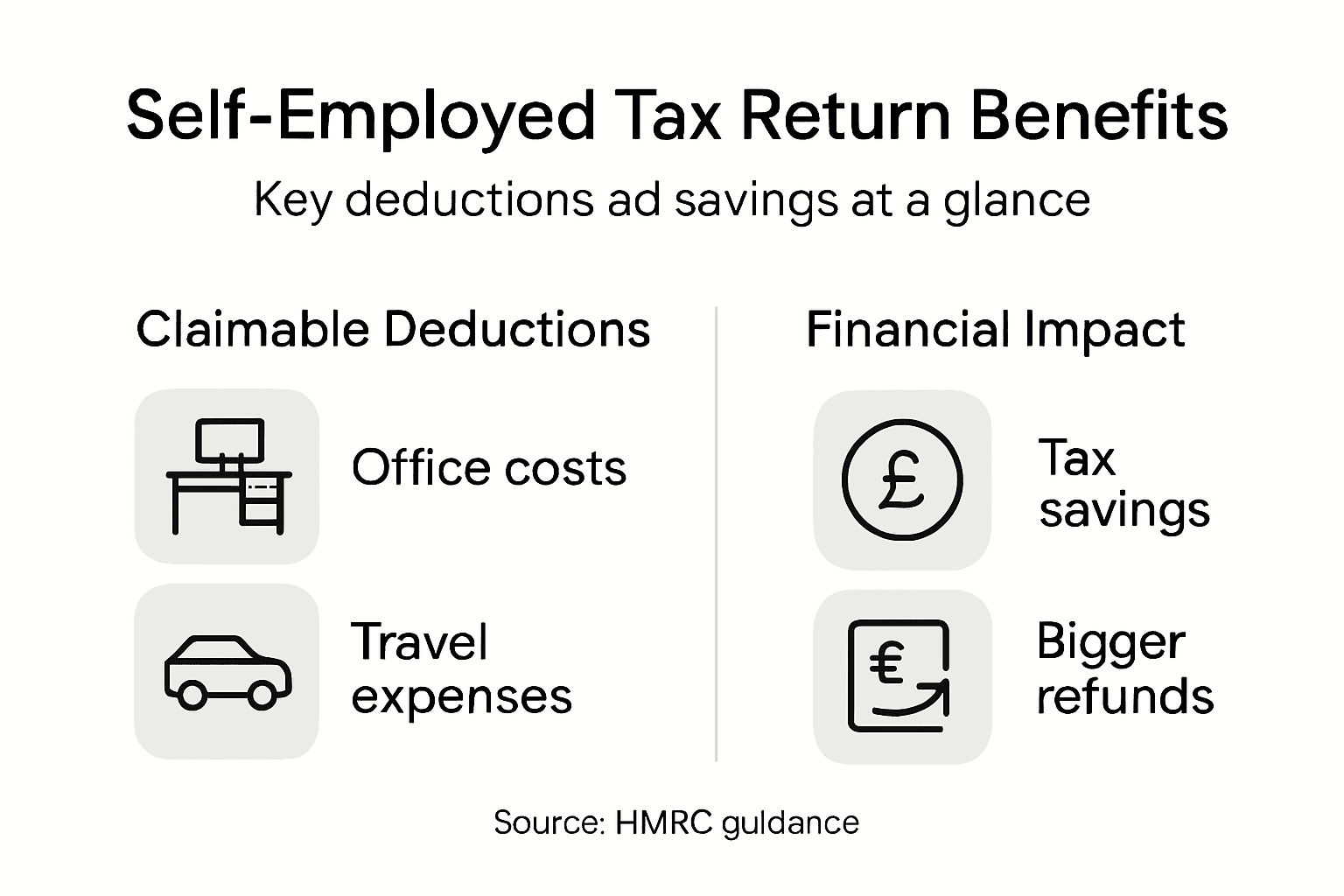
Every pound you claim as a legitimate business expense reduces your taxable profit pound for pound. At a 20% tax rate, a £500 deduction saves you £100 in tax. Over a year, forgotten deductions cost thousands in unnecessary payments.
Common Deductions Self-Employed People Claim
You can deduct ordinary and necessary business expenses from your gross income. These reduce your profit figure, which directly lowers your tax bill.
- Equipment and tools (computers, machinery, software)
- Office supplies (stationery, printer ink, folders)
- Professional fees (accountancy, legal advice)
- Vehicle expenses (fuel, repairs, insurance, road tax)
- Subscriptions and memberships (professional bodies, software)
- Training courses and professional development
- Insurance (public liability, professional indemnity)
- Rent or mortgage interest on business premises
Each expense must be wholly and exclusively for business purposes. Personal use disqualifies the entire deduction.
To help you quickly review common business deductions and their benefits, see below:
| Deduction Type | Example Expenses | Impact on Tax |
|---|---|---|
| Office & Equipment | Computers, software, stationery | Reduces taxable profit |
| Professional Fees | Accountant, legal advice | Direct cost savings |
| Vehicle Costs | Fuel, approved mileage rates | Lowers profit, less tax owed |
| Home Office Relief | Utilities, fixed rate allowance | Supports work-from-home claims |
| Subscriptions | Industry memberships, software | Increases annual tax savings |
Home Office Allowances and Work-from-Home Relief
If you work from home, you’re entitled to claim. Work-from-home tax relief allows deductions for utilities, internet, and equipment used exclusively for business.
You have two calculation methods:
- Fixed rate method: £10 per week (£520 annually) for basic costs
- Actual expenses method: Calculate exact costs of heating, lighting, council tax apportionment
The fixed rate suits most freelancers—simple, no receipts needed, HMRC accepts it automatically. Choose whichever gives you the higher deduction.
Vehicle Expenses for Self-Employed Work
If you drive for business purposes, claim the mileage. Keep a mileage logbook recording business journeys throughout the year.
You can claim either actual running costs or use the approved mileage rate (currently 45 pence per mile for cars, 24 pence for motorcycles). The fixed rate is simpler and avoids tracking fuel receipts.
Claiming deductions you’re entitled to transforms your tax position—potentially saving thousands annually.
Professional Fees and Subscriptions
Accountancy fees, bookkeeping software subscriptions, and professional body memberships all reduce taxable income. These are essential business expenses with zero personal benefit element.
Don’t overlook small subscriptions. Five subscriptions at £120 annually equals £600—worth £120 in tax savings at the 20% rate.
Maximising Your Tax Position
The difference between claiming £5,000 in deductions and £10,000 in deductions is £1,000 in tax savings. Thorough record-keeping throughout the year catches deductions you’d otherwise forget.
Keep receipts, invoices, and statements organised. Digital records make filing straightforward and ensure nothing gets missed during Self Assessment.
Pro tip Create a simple spreadsheet throughout the year with expense categories (equipment, supplies, professional fees) and add costs as they happen, rather than scrambling to reconstruct expenses in January when filing.
Take Control of Your Self Assessment with Confidence
Filing your Self Assessment tax return on time and with accuracy is crucial to safeguarding your financial success as a self-employed individual. This article highlights the common challenges you face such as meeting the 31st January deadline, avoiding costly penalties, and maximising your allowable deductions. Managing your income, expenses, and the complexity of tax rules without expert help can feel overwhelming but does not have to be.
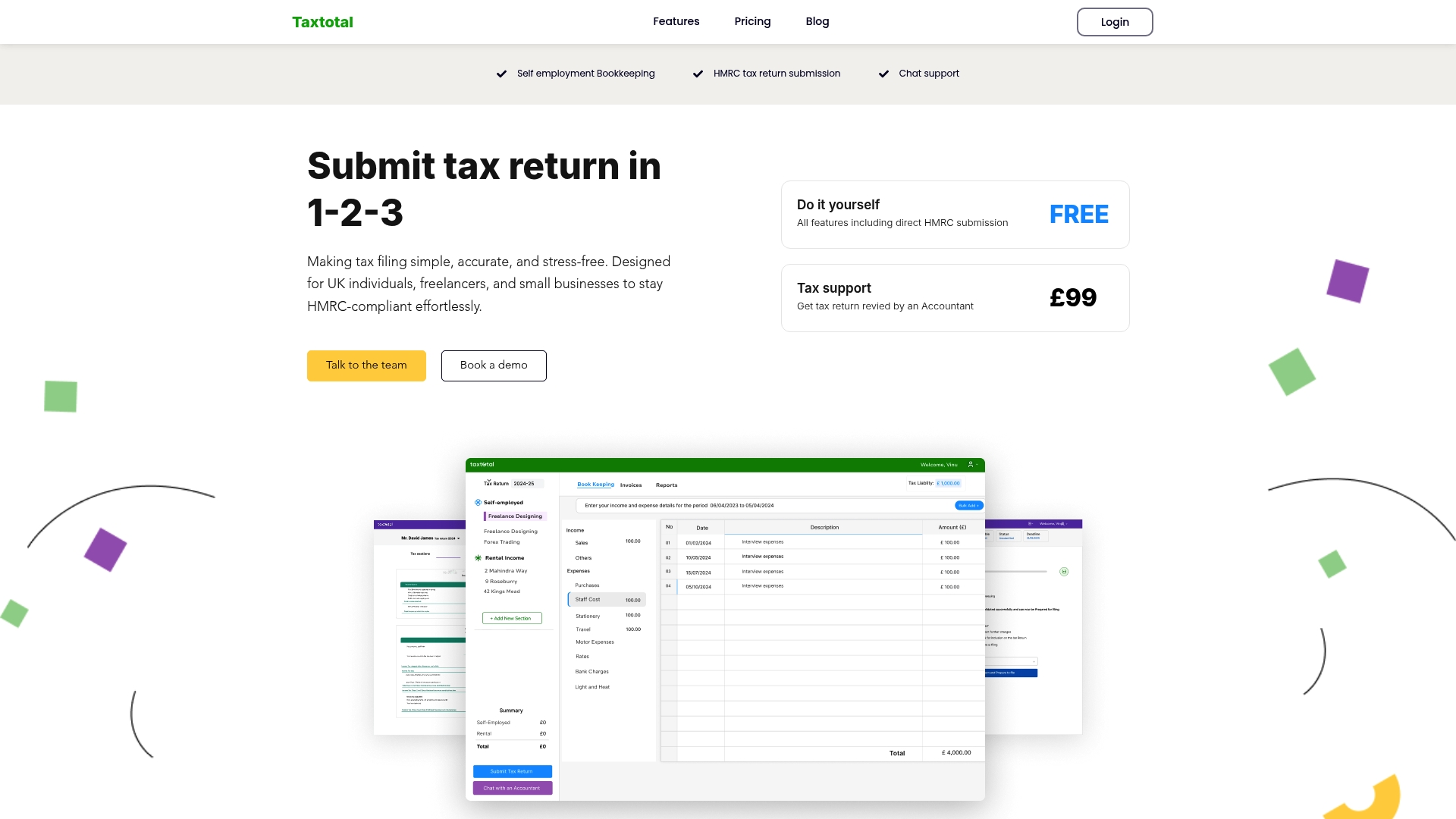
Discover how Tax Support – Taxtotal and Accounting – Taxtotal services simplify every step of the process at Taxtotal.co.uk. With real-time guidance, automatic error checking, and professional review options, you can file your return correctly and on time, protecting your financial reputation today. Take action now to avoid penalties and secure your peace of mind by starting your straightforward, accurate tax return journey with us.
Frequently Asked Questions
What is the purpose of filing a Self Assessment tax return?
Filing a Self Assessment tax return is essential for self-employed individuals to report their income, calculate the tax owed, and make National Insurance contributions. It also ensures compliance with HMRC regulations.
What are the penalties for missing the Self Assessment tax return deadline?
If you miss the Self Assessment tax return deadline, HMRC imposes automatic penalties. The first penalty is £100, followed by daily penalties of £10 after three months and additional charges if the return is six or twelve months late.
How does accurate Self Assessment filing impact my financial life?
Accurate filing of your Self Assessment affects mortgage applications, credit references, and loan eligibility. It establishes your official income, which directly influences your financial credibility.
What expenses can I claim as a self-employed individual?
Self-employed individuals can claim a variety of business expenses such as equipment costs, office supplies, professional fees, vehicle expenses, and home office allowances. Claiming these deductions reduces taxable profits and hence the tax owed.