
Facing your self-assessment as a freelancer often feels confusing and stressful. With client invoices, expense receipts, and different income streams piling up, it can be tough to know where to start or what will keep HMRC satisfied. Small mistakes or missing documents can make tax season even more overwhelming.
The right approach puts you in control. A few straightforward steps will make your self-assessment accurate, save you time, and help you claim every allowable expense. Each section of this guide introduces practical, no-nonsense methods backed by expert advice.
Get ready to discover the proven habits that successful freelancers use to organise, document, and submit their taxes with confidence. The insights ahead will help you avoid common pitfalls and finish the process with peace of mind.
Table of Contents
- 1. Gather Personal and Business Information
- 2. Check Your Income Sources and Records
- 3. List All Allowable Business Expenses
- 4. Organise Invoices and Receipts for Evidence
- 5. Use HMRC Guidelines for Accurate Entries
- 6. Review and Correct Errors Before Submission
- 7. Submit Your Tax Return and Save Confirmation
Quick Summary
| Key Message | Explanation |
|---|---|
| 1. Organise Personal and Business Information | Keep a comprehensive record of personal and business details for smooth self-assessment and accurate tax reporting. |
| 2. Track All Income Sources Meticulously | Document every income stream to ensure precise reporting and understanding of your overall financial health. |
| 3. Understand Allowable Business Expenses | Familiarise yourself with claimable expenses to reduce tax liability and keep more earnings. |
| 4. Maintain Clear Financial Documentation | Organise all invoices and receipts to provide essential proof of income and expenses for tax returns. |
| 5. Review Submissions for Accuracy | Systematically check your tax return before submission to avoid errors that could lead to penalties. |
1. Gather Personal and Business Information
Successful self-assessment for freelancers begins with meticulous organisation of personal and business details. Having a comprehensive record of your financial information is crucial for accurate tax reporting and streamlined business management.
When preparing for self-assessment, you need to collect several key documents and information categories:
-
Personal Details:
- Full legal name
- National Insurance number
- Contact information
- Bank account details
-
Business Information:
- Business name (if applicable)
- Self-employment start date
- Business address
- Unique Taxpayer Reference (UTR) number
-
Financial Documentation:
- Income records from all revenue streams
- Client invoices and contracts
- Bank statements
- Expense receipts
Maintaining an organised system for your financial records can save hours of stress during tax season and ensure accurate reporting to HMRC.
Freelancers can benefit from developing a systematic approach to document management. Consider using digital tools or spreadsheets to track income, expenses, and critical business information consistently throughout the year.
The key is creating a reliable filing system that allows you to quickly retrieve documents when needed. Many successful freelancers recommend scanning physical receipts and maintaining both digital and physical backups of important financial records.
Pro tip: Create a dedicated folder system – both digital and physical – where you store tax-related documents chronologically to simplify your self-assessment preparation.
2. Check Your Income Sources and Records
Tracking and verifying your income streams is fundamental for accurate self-assessment and maintaining financial transparency as a freelancer. Understanding the full spectrum of your earnings ensures you report precisely to HMRC and manage your tax obligations effectively.
Freelancers typically have multiple income sources that require careful documentation:
-
Freelance Contract Work
- Direct client payments
- Project-based income
- Consultancy fees
-
Digital Platform Earnings
- Online marketplace revenues
- Freelance website income
- Digital service payments
-
Additional Income Streams
- Passive income sources
- Royalties or licensing fees
- Investment returns
Comprehensive income tracking is not just about tax compliance – it’s about understanding your true financial performance.
When documenting income, professional record-keeping methods are crucial. You should collect and organise documents such as:
- Bank statements
- Client invoices
- Payment receipts
- Contract agreements
- Annual earnings summaries
Digital tools and spreadsheets can help streamline this process, allowing you to categorise and track income efficiently throughout the financial year.
Pro tip: Create a dedicated digital folder for each tax year where you consistently save all income-related documents, making your self-assessment preparation dramatically smoother.
3. List All Allowable Business Expenses
Knowing and tracking your allowable business expenses can significantly reduce your tax liability and improve your financial management as a freelancer. Understanding which expenses you can claim is crucial for maximising your tax efficiency and keeping more of your hard-earned income.
HMRC permits freelancers to deduct specific business-related expenses that are wholly and exclusively related to running your business:
-
Office and Workspace Expenses
- Home office costs
- Rent for dedicated workspace
- Utilities proportional to business use
- Office equipment and furniture
-
Technology and Communication
- Computer hardware
- Software subscriptions
- Mobile phone and internet expenses
- Website hosting and maintenance
-
Professional Development
- Training courses
- Industry conferences
- Professional subscriptions
- Books and learning materials
Accurate expense tracking is not just about reducing tax – it’s about understanding your true business costs and financial performance.
When claiming expenses, you’ll need to understand home office allowances and maintain meticulous records. HMRC requires clear evidence of business purpose for each expense, so keep digital and physical receipts organised by category and tax year.
Pro tip: Use a dedicated business bank account and digital accounting tool to automatically track and categorise your expenses, making self-assessment preparation dramatically simpler.
4. Organise Invoices and Receipts for Evidence
Maintaining a meticulous financial documentation system is crucial for freelancers preparing their self-assessment tax returns. Properly organised invoices and receipts serve as essential evidence for your income and business expenses.
Effective documentation management involves several key strategies:
-
Physical Document Management
- Use clearly labelled folders
- Sort by financial year
- Chronological ordering
- Store in secure fireproof location
-
Digital Record Keeping
- Scan physical receipts
- Create digital backup folders
- Use cloud storage
- Implement consistent naming conventions
-
Critical Documentation to Retain
- Client invoices
- Expense receipts
- Bank statements
- Contract agreements
- Payment confirmations
Comprehensive documentation is your financial shield against potential HMRC inquiries.
Freelancers can create systematic self-employment ledgers that combine all financial records into one comprehensive system. This approach simplifies tax preparation and provides clear financial transparency.
Consider using digital accounting tools that automatically categorise and store your financial documents. These platforms can help you track income streams, manage expenses, and generate reports quickly.
Pro tip: Implement a monthly document review process where you digitalise, categorise, and backup all financial records to prevent last-minute self-assessment stress.
5. Use HMRC Guidelines for Accurate Entries
Navigating the complexities of self-assessment tax returns requires a thorough understanding of HMRC’s official guidelines. Precision in your tax entries can mean the difference between a smooth submission and potential financial complications.
HMRC provides specific requirements for freelancers and self-employed individuals to ensure accurate tax reporting:
-
Key Reporting Requirements
- Precise income declaration
- Accurate expense categorisation
- Comprehensive record-keeping
- Transparent financial reporting
-
Common Reporting Categories
- Self-employment income
- Trading profits
- Property income
- Investment earnings
- Additional income sources
-
Documentation Essentials
- Business bank statements
- Sales and purchase records
- Expense receipts
- Invoices and contracts
- Annual financial summaries
Adherence to HMRC guidelines is not optional – it’s your legal responsibility as a self-employed professional.
Freelancers can register for self-assessment accurately by understanding the specific requirements for their business structure. This involves correctly classifying income, maintaining detailed records, and using the appropriate accounting method.
The cash basis accounting method is particularly useful for smaller freelance operations. It allows you to record income and expenses when money actually changes hands rather than using complex accrual accounting techniques.
Pro tip: Download and review the latest HMRC self-assessment guide annually to ensure you’re aware of any recent regulatory changes or reporting requirements.
6. Review and Correct Errors Before Submission
Precision is paramount when submitting your self-assessment tax return to HMRC. A single overlooked error can trigger unnecessary complications and potential financial penalties.
Systematic error checking involves multiple critical review stages:
-
Financial Document Review
- Cross-reference income statements
- Verify expense calculations
- Check bank statement reconciliation
- Confirm numerical accuracy
-
Common Error Categories
- Misreported income
- Incorrect expense categorisation
- Mathematical miscalculations
- Missing documentation
- Incomplete personal details
-
Review Strategies
- Use digital accounting tools
- Enable automatic error checking
- Perform manual cross-verification
- Consider professional review
Thorough review is your primary defence against potential HMRC investigations and unexpected tax complications.
Freelancers can review tax return mistakes by systematically checking each section of their submission. Utilise HMRC’s online tools and guidance to identify potential issues before final submission.
Consider allocating sufficient time for a comprehensive review. Many errors occur due to rushed submissions or last-minute panic.
Pro tip: Create a dedicated review checklist and schedule your tax return review at least two weeks before the submission deadline to allow ample time for corrections.
7. Submit Your Tax Return and Save Confirmation
Submitting your self-assessment tax return is the critical final step in your annual tax compliance journey. Understanding the submission process and preserving your confirmation can protect you from potential future complications.
Key steps for successful submission include:
-
Online Submission Process
- Log into HMRC online portal
- Review all entries carefully
- Confirm personal details
- Submit before deadline
-
Confirmation Documentation
- Screenshot submission page
- Save PDF confirmation
- Record submission date
- Note unique submission reference
-
Digital Storage Recommendations
- Cloud storage backup
- Multiple digital copies
- Secure file naming convention
- Password protect files
Your submission confirmation is your primary evidence of timely tax compliance.
Freelancers can prepare their self-assessment tax return with confidence by following HMRC’s official online guidance and ensuring all documentation is accurately preserved.
The confirmation document serves as crucial proof of your tax submission. It provides a timestamp, submission reference number, and validates your compliance with HMRC requirements.
Pro tip: Create a dedicated digital folder labelled with the tax year and immediately save your submission confirmation in multiple secure locations to prevent potential document loss.
Below is a comprehensive table summarising the main steps and considerations for freelancers when preparing their self-assessment tax returns as discussed in the article.
| Aspect | Details | Key Actions |
|---|---|---|
| Personal and Business Information Gathering | Includes personal data, business details, and financial documentation. | Ensure all fields are up-to-date and accessible. |
| Reviewing Income Sources | Account for all revenue streams including freelance work and additional earnings. | Track entries accurately using digital tools. |
| Listing Business Expenses | Identify allowed expenses to maximise tax deductions. | Maintain clear records with corresponding receipts. |
| Organising Documentation | Arrange invoices, receipts, and contracts in a systematic manner. | Implement both physical and digital filing systems. |
| Following HMRC Guidelines | Adhere to governmental requirements for tax reports. | Use current regulations and guides to ensure compliance. |
| Final Review and Submission | Check all entries for errors before submitting. | Keep digital backups of the submission confirmation for future reference. |
Simplify Your Self Assessment Journey with Taxtotal
Managing a self-assessment tax return can feel overwhelming for freelancers trying to keep track of income, expenses and documentation accurately. The key challenges highlighted in the article include organising your financial records, ensuring precise HMRC-compliant entries and avoiding costly errors before submission. If you want to breeze through your tax return with confidence and avoid last-minute stress consider using a tool that simplifies every step of the process.
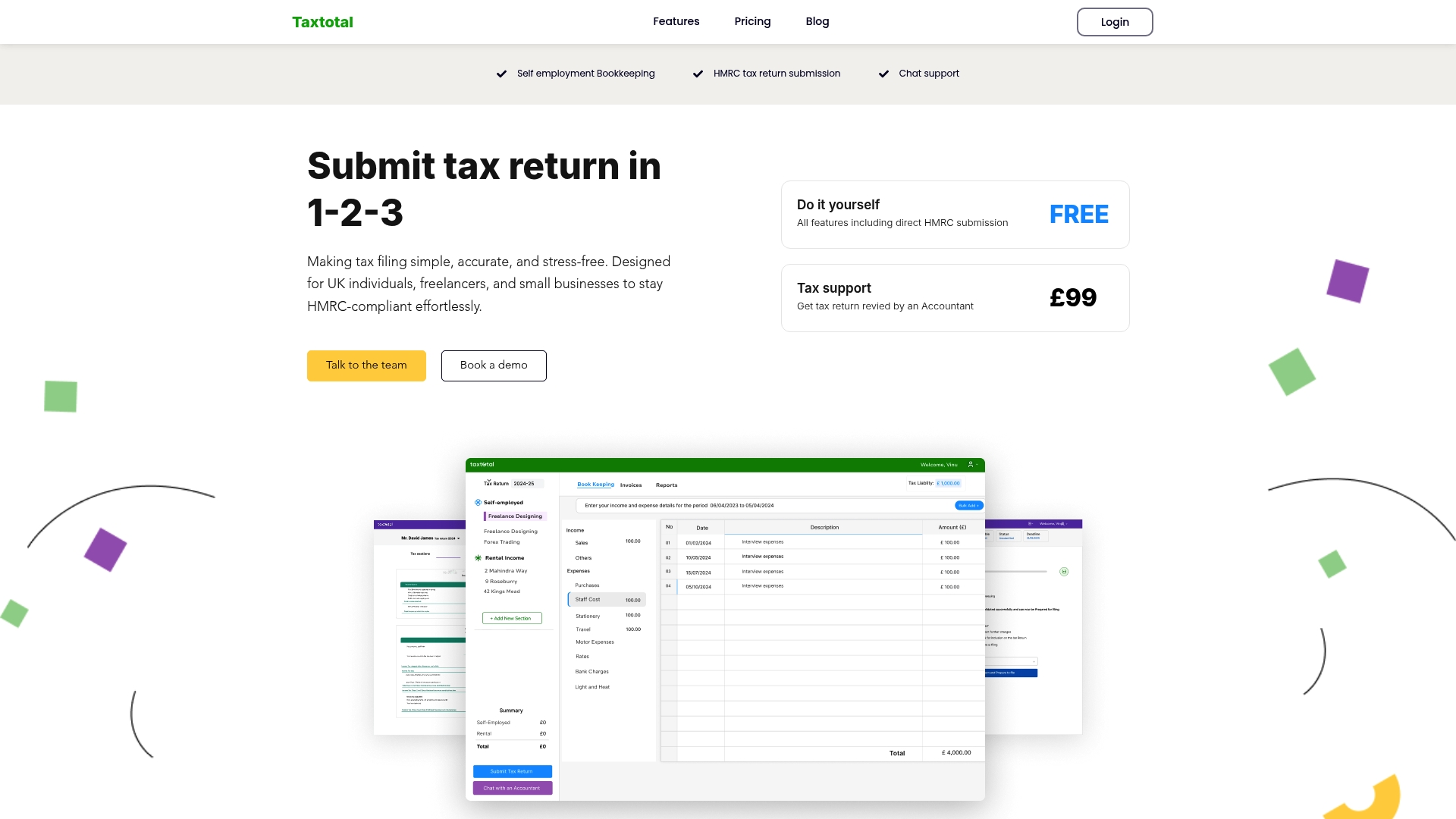
Take control of your self-assessment today with Taxtotal. Our UK-based online platform guides you effortlessly through entering income and allowable expenses while providing real-time tax calculations and built-in error checking to ensure maximum accuracy. Benefit from direct submission to HMRC and optional professional reviews tailored especially for freelancers. Don’t let tax deadlines cause anxiety – start streamlining your tax management now by visiting Taxtotal. Your simple, reliable, and fully compliant tax journey awaits.
Frequently Asked Questions
How do I gather the necessary personal and business information for self-assessment?
Start by collecting your full legal name, National Insurance number, and bank account details, alongside your business name and Unique Taxpayer Reference (UTR) number. Compile all relevant documents systematically to simplify your self-assessment process.
What types of income should I track for my self-assessment?
Ensure you document all income sources such as freelance contracts, digital platform earnings, and any additional income streams like royalties. Use a dedicated digital folder for each tax year to keep track of payment receipts and invoices for clarity.
What business expenses can I claim on my self-assessment?
You can claim allowable business expenses related to running your business, such as office supplies, professional training costs, and technology subscriptions. Track these expenses meticulously to understand your true financial performance and reduce your overall tax liability.
How can I organise my invoices and receipts effectively?
Organise physical and digital documents by creating clearly labelled folders sorted by financial year. Use consistent naming conventions and implement cloud storage to ensure easy access and backup of important financial documents.
What steps should I take to ensure my tax return entries are accurate before submission?
Review all financial documents thoroughly by verifying income and expense entries, checking for mathematical miscalculations, and ensuring all required documentation is included. Allocating time for a comprehensive review at least two weeks before the submission deadline can prevent errors.
What should I do after submitting my self-assessment tax return?
After submission, save your confirmation by taking a screenshot and storing it securely in multiple locations. This documentation serves as proof of your compliance and should be kept for future reference in case of inquiries.
Recommended
- Why Complete Self Assessment—Legal, Financial, and Practical Reasons
- Master the Self-Employed Tax Workflow for UK Freelancers
- How to pay tax for a freelancer? – TaxTotal – Taxtotal
- Top 5 Taxfileruk.com Alternatives in 2026 for Freelancers and Sole Traders in the UK Seeking Easy-to-Use Online Solutions for Self Assessment Tax Filing