
Sorting through piles of receipts and business invoices can quickly become overwhelming for UK freelancers and sole traders, especially if you lack accounting experience. Staying on top of your financial records matters because capturing every financial transaction is not just helpful, it’s a legal requirement set by HMRC. This practical guide shows you how to organise your documents, apply digital solutions, and confidently tackle your Self Assessment without the stress.
Table of Contents
- Step 1: Organise Income And Expense Records
- Step 2: Input Financial Details Into Tax Platform
- Step 3: Review Calculations And Resolve Errors
- Step 4: Submit Self Assessment To HMRC
- Step 5: Verify Submission And Maintain Records
Quick Summary
| Key Insight | Explanation |
|---|---|
| 1. Maintain accurate records | Document every financial transaction, including invoices and receipts, to comply with tax regulations. |
| 2. Use digital record-keeping | Implement digital solutions to streamline tracking and ensure easy access to financial data for HMRC. |
| 3. Verify tax details thoroughly | Review all entries for accuracy before submission to prevent tax authority scrutiny and potential penalties. |
| 4. Submit by deadline | Adhere to the submission deadline on 31 January to avoid late filing penalties and ensure compliance. |
| 5. Organise post-submission files | Keep a systematic record of your tax submissions for at least five years to protect your financial history. |
Step 1: Organise income and expense records
Managing your financial records is crucial for successful self-employment in the United Kingdom. This section will guide you through systematically organising your income and expense documentation to ensure smooth tax reporting and compliance.
The UK government mandates that self-employed individuals maintain comprehensive financial records, which means capturing every financial transaction with precision. These records must cover the entire tax year from 6 April to 5 April and include specific documentation types:
- Invoices for all work completed
- Receipts for business expenses
- Bank statements showing business income and expenditure
- Contracts and payment records
To streamline this process, consider maintaining digital records as recommended by the UK’s Making Tax Digital initiative. Digital record-keeping allows for easier tracking, reduces manual errors, and helps you stay compliant with HMRC requirements.
Here is a summary of key digital record-keeping solutions for self-employed individuals:
| Solution Type | Ease of Use | HMRC Compatibility | Security Level |
|---|---|---|---|
| Cloud Accounting App | Simple interface | Direct data transfer | High, with encryption |
| Desktop Software | Moderate learning | Manual data upload needed | Varies by provider |
| Spreadsheets | Customisable | Needs bridging software | Dependent on storage |
Accurate record-keeping isn’t just good practice – it’s a legal requirement that protects you from potential penalties.
Start by establishing a consistent system for documenting your financial activities. This might involve using accounting software, creating dedicated folders (physical or digital), or developing a monthly review process. Categorise expenses clearly, such as office supplies, travel, equipment, and professional development costs.

Pro tip: Consider photographing or scanning paper receipts immediately and storing digital copies in a secure, organised cloud folder to prevent loss and simplify future tax preparation.
Step 2: Input financial details into tax platform
Now that you’ve organised your financial records, it’s time to transfer those details into your chosen tax reporting platform. This critical step ensures accurate tax calculations and smooth submission to HMRC.
The UK’s digital tax reporting system requires self-employed individuals to input their financial information through approved digital platforms. This process involves carefully transferring your meticulously organised income and expense records into the appropriate digital format.
To begin, gather all your financial documentation and follow these key steps:
- Login to your chosen HMRC-compatible tax platform
- Select the current tax year
- Enter your total business income from invoices and contracts
- Input all allowable business expenses
- Verify each financial entry for accuracy
Precision matters: Even small errors can trigger unnecessary scrutiny from tax authorities.
Each financial detail requires careful consideration. Business income includes all payments received for your services, while expenses cover everything from office supplies to professional subscriptions. Be prepared to provide specific details for each transaction, including dates, amounts, and relevant categories.
Pro tip: Before final submission, run a comprehensive review of your entered financial details, cross-referencing each figure with your original records to minimise potential errors.
Step 3: Review calculations and resolve errors
Careful review of your tax calculations is the final crucial checkpoint before submitting your Self Assessment. This stage helps you catch potential errors, avoid unnecessary complications, and ensure your tax return is accurate and compliant.
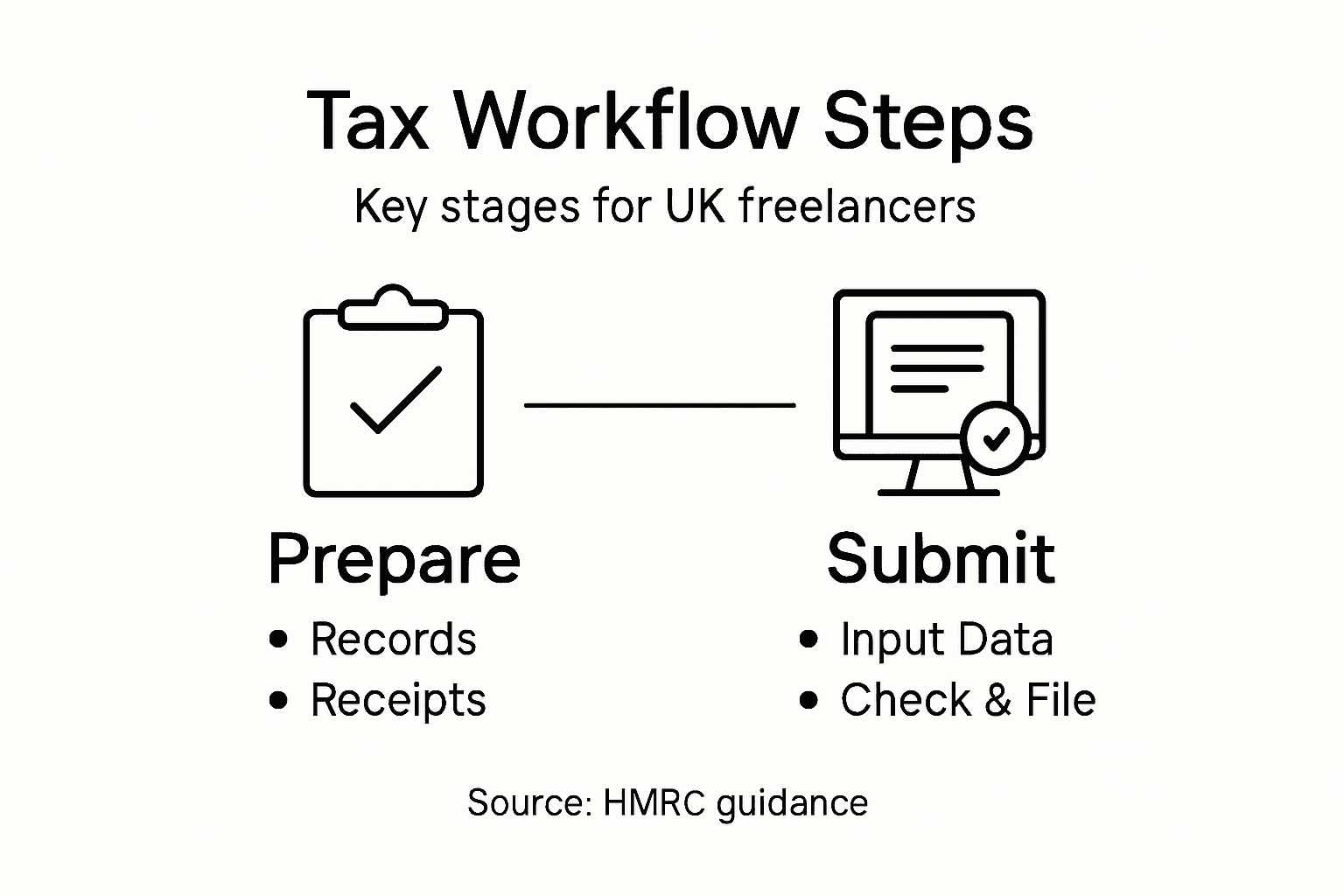
When reviewing your tax details, focus on identifying common tax return errors that could trigger HMRC scrutiny. These typically include mathematical miscalculations, misreported income, or incorrectly claimed expenses.
Your comprehensive review should cover these key areas:
- Double-check all numerical entries
- Verify total income from all sources
- Confirm expense categories and amounts
- Compare calculations with original financial records
- Validate personal tax allowance and relief claims
Small errors can result in significant financial consequences, so precision is paramount.
Pay special attention to income streams that might be easily overlooked, such as freelance project payments, investment returns, or occasional consultancy work. Each financial detail matters and could impact your overall tax liability.
Pro tip: Create a separate checklist with all critical financial information and methodically cross-reference each entry to ensure absolute accuracy before final submission.
Step 4: Submit Self Assessment to HMRC
The final stage of your self-employed tax workflow involves submitting your carefully prepared Self Assessment directly to HMRC. This crucial moment determines your tax compliance and potential financial obligations for the year.
To ensure a smooth submission, follow the online filing process with precision and attention to detail. The online portal provides a straightforward method for completing your tax return, with built-in validation checks to minimise potential errors.
Key steps for successful submission include:
- Log in to your HMRC online account
- Select the correct tax year
- Review all entered information one final time
- Confirm and submit your complete tax return
- Arrange payment for any tax due
Missing the submission deadline can result in automatic penalties, so timing is absolutely critical.
Pay close attention to the submission deadline, which typically falls on 31 January following the end of the tax year. If you owe tax, you’ll need to arrange payment at the same time as your submission. Remember that electronic submission offers more flexibility and is generally faster than paper filing.
The table below compares submission consequences based on timing:
| Submission Timing | Outcome | Financial Impact |
|---|---|---|
| On or before deadline | Records accepted, tax obligations clear | No penalties incurred |
| After deadline | Late filing penalty plus daily charges | Increased tax liability |
Pro tip: Set multiple reminders in your calendar for a week before and on the actual submission deadline to ensure you never miss the critical HMRC filing date.
Step 5: Verify submission and maintain records
After successfully submitting your Self Assessment, the final stage involves verifying your submission and establishing a robust record-keeping system that protects your financial history and ensures compliance with HMRC regulations.
Carefully review your official tax submission records to confirm all details are accurate and complete. Your digital confirmation from HMRC serves as essential proof of timely filing and should be stored securely for future reference.
Key actions for maintaining comprehensive tax records include:
- Download your submitted tax return PDF
- Create a dedicated digital folder for tax documents
- Save confirmation emails and receipts
- Organise records by tax year
- Store documents securely for minimum 5 years
HMRC requires self-employed individuals to maintain precise financial records for at least five years after the submission deadline.
Digital storage solutions offer the most convenient method for preserving your tax documentation. Consider using cloud storage with robust security features, ensuring your records remain accessible yet protected from potential loss or damage.
Pro tip: Implement an annual digital archiving routine where you compress and backup tax-related files at the end of each financial year, creating multiple secure copies across different storage platforms.
Simplify Your Self-Employed Tax Journey with Expert Support
Managing the self-employed tax workflow in the United Kingdom can feel overwhelming with so many detailed steps like organising records, inputting financial details, reviewing calculations, submitting returns, and maintaining records. Common challenges such as avoiding errors, meeting HMRC deadlines, and ensuring accuracy demand a solution that takes the stress away while enhancing your control over your finances. By mastering income and expense tracking along with digital compliance, you set the foundation for smooth tax filing—but it is easy to feel uncertain without professional guidance.
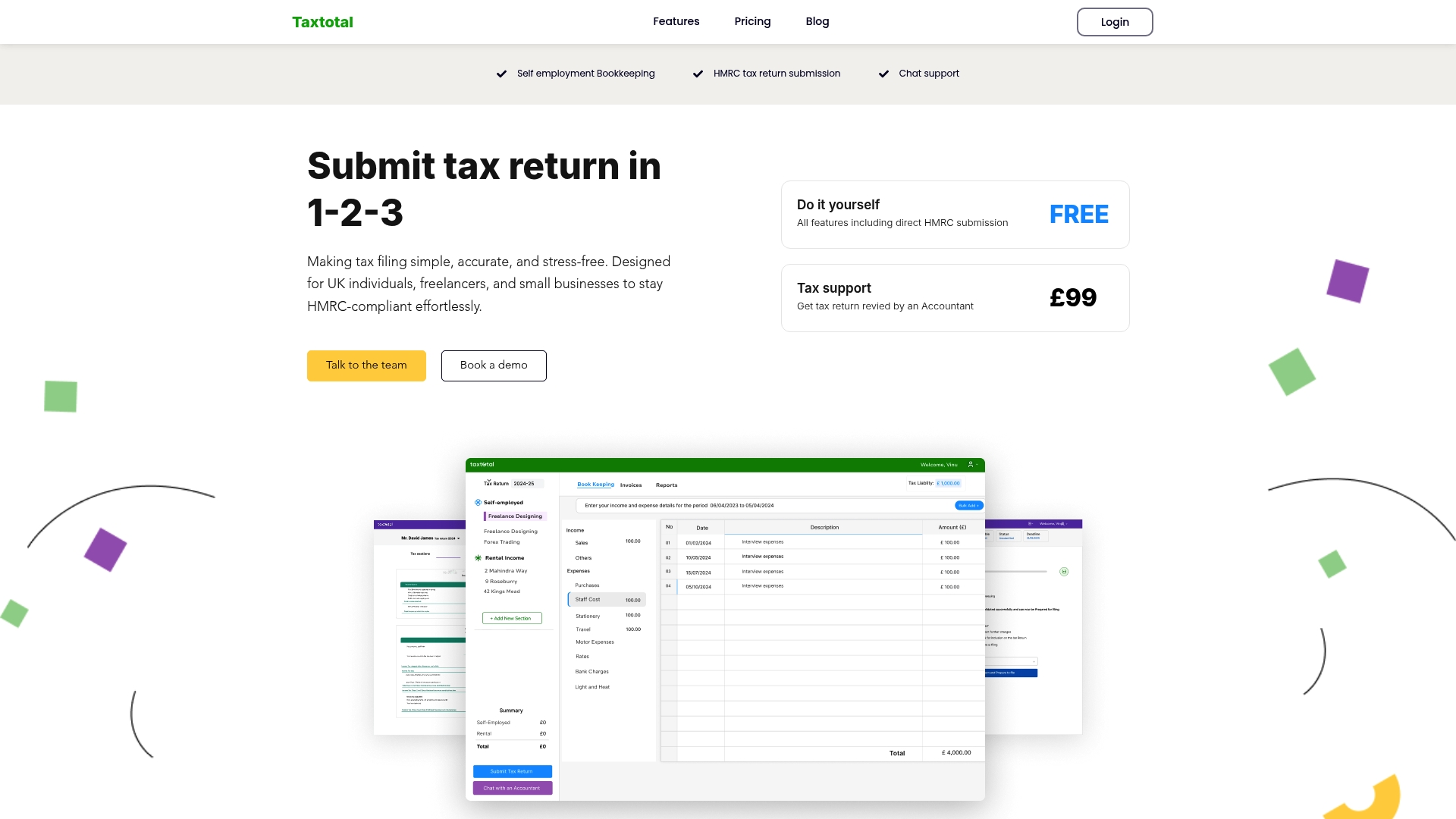
Empower yourself with Taxtotal.co.uk, a tailored online platform designed specifically for UK freelancers and self-employed individuals who want simple, reliable tools for their tax management. Whether you need help entering your income and expenses, want real-time tax updates, or wish to double-check your submissions through expert Tax Support – Taxtotal, this is the place for you. Discover user-friendly Accounting – Taxtotal features combined with professional backing so you can confidently meet HMRC requirements without fuss. Visit Taxtotal.co.uk now and take the hassle out of tax filing so you can focus on growing your freelance business.
Frequently Asked Questions
What records do I need to keep as a self-employed freelancer in the UK?
To comply with UK tax regulations, you must retain records of all income and expenses for the tax year, including invoices, receipts, bank statements, and contracts. Start organising these documents regularly to facilitate easier tax reporting at the end of the financial year.
How do I input my financial details into a tax platform for self-assessment?
To input your financial details, log in to your chosen HMRC-compatible tax platform and select the current tax year. Enter your total business income and allowable expenses carefully, ensuring all entries are accurate before submission.
What steps should I take to review my tax calculations before submission?
Carefully double-check all numerical entries and verify your total income and expense amounts. Employ a checklist to compare your calculations with original financial records, ensuring that all information is accurate and ready for submission.
When is the deadline for submitting my Self Assessment tax return?
The submission deadline for your Self Assessment tax return is typically 31 January following the end of the tax year. Set reminders well in advance to avoid missing this critical date, as late submissions can incur penalties.
How should I maintain my financial records after submitting my Self Assessment?
After submission, download your tax return PDF and create a dedicated folder for all tax documents, including receipts and confirmation emails. Keep these records secure and organised for at least five years, as required by HMRC regulations.
What are common errors to look out for in my self-employment tax return?
Common errors include mathematical miscalculations, misreported income, and incorrectly claimed expenses. Review all entries meticulously and consider running a final check against your original financial documentation to prevent any issues.