
No one warns you how quickly the financial side of running your own business can get complicated for new sole traders in the United Kingdom. Once you begin earning over £1,000 from self-employment, you need to register with HM Revenue and Customs for Self Assessment and get to grips with your tax responsibilities. Understanding what sole trader status really means helps you avoid costly mistakes, meet all your legal obligations, and take control of your business from day one.
Table of Contents
- What Sole Trader Status Really Means
- Core Features Of Sole Trader Businesses
- Legal Requirements And HMRC Registration
- Tax Obligations And National Insurance
- Risks, Liabilities, And Business Protections
- Sole Trader Status Vs Limited Company
Key Takeaways
| Point | Details |
|---|---|
| Complete Control | As a sole trader, you maintain full control over your business operations and retain all profits, but you also assume unlimited personal liability for business debts. |
| Registration Requirements | It is essential to register with HMRC for Self Assessment once your annual income exceeds £1,000 and to comply with tax obligations to avoid penalties. |
| Financial Risks | Sole traders face significant financial risks as there is no legal separation between personal and business assets, meaning personal wealth is at risk if the business fails. |
| Choosing a Structure | Understanding the differences between sole trader and limited company structures can help you make informed decisions based on your business goals and financial situation. |
What Sole Trader Status Really Means
A sole trader is the simplest business structure in the United Kingdom, designed for individuals wanting to run their business independently. This status means you are essentially your business – there’s no legal separation between your personal and professional financial worlds. Sole trader tax registration requires understanding several key responsibilities and implications.
Under this business model, you retain complete control over all business decisions and keep 100% of the profits after paying taxes. However, this freedom comes with significant personal financial risk. Unlike limited companies, sole traders have unlimited personal liability, which means your personal assets could be at risk if your business encounters financial difficulties.
The key characteristics of sole trader status include:
- Full control over business operations
- Keep all business profits after tax
- Responsible for all business debts personally
- Minimal administrative and reporting requirements
- Must register for Self Assessment if annual earnings exceed £1,000
- Can work across multiple income streams and clients
Becoming a sole trader is straightforward, but it requires careful financial management. You’ll need to track income, manage expenses, and submit annual tax returns to HMRC. While this structure offers flexibility, it also demands personal financial discipline and understanding of tax obligations.
Pro tip: Keep detailed financial records from day one and set aside approximately 25-30% of your income for potential tax payments to avoid unexpected financial strain.
Core Features of Sole Trader Businesses
Sole trader businesses represent a unique entrepreneurial model that offers maximum flexibility and direct control for individual business owners. Business legal structure options demonstrate that this approach provides the most straightforward path for independent professionals seeking to launch their ventures.
The fundamental characteristics of sole trader businesses encompass a range of distinctive features that set them apart from more complex corporate structures. Key attributes include complete operational autonomy, simplified financial management, and direct personal responsibility for all business outcomes. Unlike limited companies, sole traders have no legal separation between personal and business finances, which means both the rewards and risks are entirely personal.
Critical features of sole trader businesses include:
- Unlimited personal control over business decisions
- Direct ownership of all business profits
- Simplified tax reporting and minimal administrative requirements
- Ability to operate across multiple income streams
- Low startup and maintenance costs
- Flexibility to scale or pivot business model quickly
- Personal responsibility for all business debts and obligations
The financial implications of sole trader status are significant. While you retain 100% of business profits, you also bear full responsibility for any financial shortfalls. This means your personal assets could be at risk if the business encounters financial difficulties. Potential sole traders must carefully weigh the advantages of complete control against the potential personal financial exposure.

Pro tip: Maintain meticulous financial records and consider professional indemnity insurance to protect yourself against potential business-related financial risks.
Legal Requirements and HMRC Registration
Navigating the legal landscape for sole traders in the United Kingdom requires careful attention to HMRC registration requirements. Sole trader registration process is a critical first step for anyone starting their independent business journey, with specific legal obligations that must be understood and followed precisely.
The primary legal requirement for sole traders is registering with HM Revenue and Customs (HMRC) for Self Assessment. This process becomes mandatory when your annual business income exceeds £1,000. The registration involves several key steps and documentation requirements that ensure you’re compliant with UK tax regulations.
Key legal and registration requirements include:
- Obtaining a National Insurance number
- Registering for Self Assessment by 5 October following the end of the tax year
- Maintaining accurate business financial records
- Submitting annual tax returns by 31 January each year
- Paying income tax and National Insurance contributions
- Reporting all business income and expenses
- Keeping records for at least 5 years after the 31 January submission deadline
Failing to meet these legal obligations can result in significant financial penalties. HMRC takes a strict approach to compliance, with potential fines for late registration, incomplete tax returns, or missed payment deadlines. The process might seem daunting, but careful planning and timely action can help sole traders navigate these requirements smoothly.
Pro tip: Create a dedicated digital folder to store all tax-related documents and set calendar reminders for key HMRC submission deadlines to avoid potential penalties.
This quick reference outlines tax and registration thresholds for sole traders:
| Requirement | Trigger Threshold | Action Needed |
|---|---|---|
| Self Assessment Registration | Annual income over £1,000 | Register with HMRC by 5 October |
| VAT Registration | Turnover above £85,000 | Apply for VAT registration |
| Class 4 National Insurance | Profits above £12,570 (current threshold) | Begin paying Class 4 contributions |
| Record Keeping | Any trading | Store records for at least 5 years |
Tax Obligations and National Insurance
Sole traders in the United Kingdom face complex tax responsibilities that extend beyond simple income reporting. Sole trader tax calculations require careful understanding of Income Tax, National Insurance contributions, and potential additional tax liabilities.
The tax system for sole traders involves multiple layers of financial obligations. Income Tax is calculated on business profits after deducting allowable expenses, with rates varying depending on total annual earnings. Simultaneously, National Insurance contributions are mandatory and structured in different classes based on profit levels and individual circumstances.
Key tax and National Insurance obligations include:
- Paying Income Tax on business profits
- Submitting annual Self Assessment tax returns
- Calculating and paying Class 2 National Insurance contributions
- Paying Class 4 National Insurance if profits exceed specified thresholds
- Potentially registering for VAT if annual turnover exceeds £85,000
- Maintaining accurate financial records for tax purposes
- Understanding personal allowance and tax band implications
The complexity of tax obligations can be challenging for new sole traders. Different profit levels trigger different tax and National Insurance requirements, making it crucial to understand how your business income impacts your overall tax liability. Accurate record-keeping and proactive financial planning are essential to manage these obligations effectively.
Pro tip: Consider consulting a professional accountant during your first year to ensure complete understanding of your specific tax obligations and potential deductions.
Risks, Liabilities, and Business Protections
Sole traders face unique financial vulnerabilities that distinguish them from other business structures. Unlimited liability risks mean that business debts and legal challenges can directly impact personal financial assets, creating a complex risk landscape for independent professionals.
The fundamental challenge for sole traders is the complete legal integration of personal and business finances. Unlike limited companies, there is no legal separation between the individual and their business entity. This means that if the business encounters financial difficulties, creditors can potentially pursue personal assets such as savings, property, or investments to settle outstanding debts.
Key risks and potential protection strategies include:
- Personal assets are exposed to business-related legal claims
- No legal distinction between personal and business finances
- Potential total loss of personal wealth in business failure
- Risk of bankruptcy if business debts exceed personal resources
- Potential legal actions can target personal property
- Limited protection compared to incorporated business structures
- Higher insurance requirements to mitigate potential risks
Mitigating these risks requires a proactive approach. Professional indemnity insurance, careful financial planning, and maintaining robust business records can provide some protection. However, sole traders must always be acutely aware that their personal financial world is fundamentally intertwined with their business operations.
Pro tip: Invest in comprehensive business insurance and maintain a separate business bank account to create a financial buffer and demonstrate professional financial management.
Sole Trader Status vs Limited Company
Understanding the fundamental differences between sole trader status and limited company structures is crucial for UK entrepreneurs making strategic business decisions. Business structure comparisons reveal significant variations in legal protection, tax treatment, and operational complexity.
The key distinction lies in legal and financial liability. Sole traders are personally responsible for all business debts and legal claims, with no separation between personal and business assets. In contrast, limited companies create a distinct legal entity, providing shareholders with protection from personal financial risk and offering a more sophisticated business framework.
Key comparative features include:
- Legal liability protection
- Tax treatment and efficiency
- Administrative complexity
- Credibility with clients and investors
- Potential for raising external capital
- Reporting and compliance requirements
- Personal financial risk exposure
Financial considerations play a critical role in this decision. Sole traders typically experience simpler tax calculations and lower administrative costs, while limited companies benefit from potentially more advantageous corporate tax rates and enhanced professional perception. The choice depends on individual business goals, expected turnover, and long-term growth strategies.
Here is a comparison of sole trader and limited company business structures in the UK:
| Attribute | Sole Trader | Limited Company |
|---|---|---|
| Liability | Unlimited personal exposure | Limited to company assets |
| Tax Efficiency | Straightforward, profits taxed as income | Separate corporate tax rates |
| Administrative Load | Minimal, basic annual filings | Extensive statutory reporting |
| Credibility | Suits freelancers, less formal | Greater trust, professional image |
| Capital Raising | Restricted to personal funds or borrowing | Can attract investors, issue shares |
| Financial Separation | No distinction, combined assets | Clear entity separation, asset protection |
Pro tip: Consult a qualified accountant to analyse your specific business circumstances and determine the most financially advantageous structure for your unique situation.
Simplify Your Sole Trader Tax Journey with Taxtotal
Navigating the complexities of sole trader tax obligations can feel overwhelming, especially when managing unlimited personal liability and strict HMRC deadlines. If you want to avoid costly penalties and reduce stress around Self Assessment filings, Taxtotal.co.uk offers an easy, reliable solution tailored for sole traders like you. From real-time tax calculations to professional review support, our platform helps you stay compliant while confidently managing your finances.
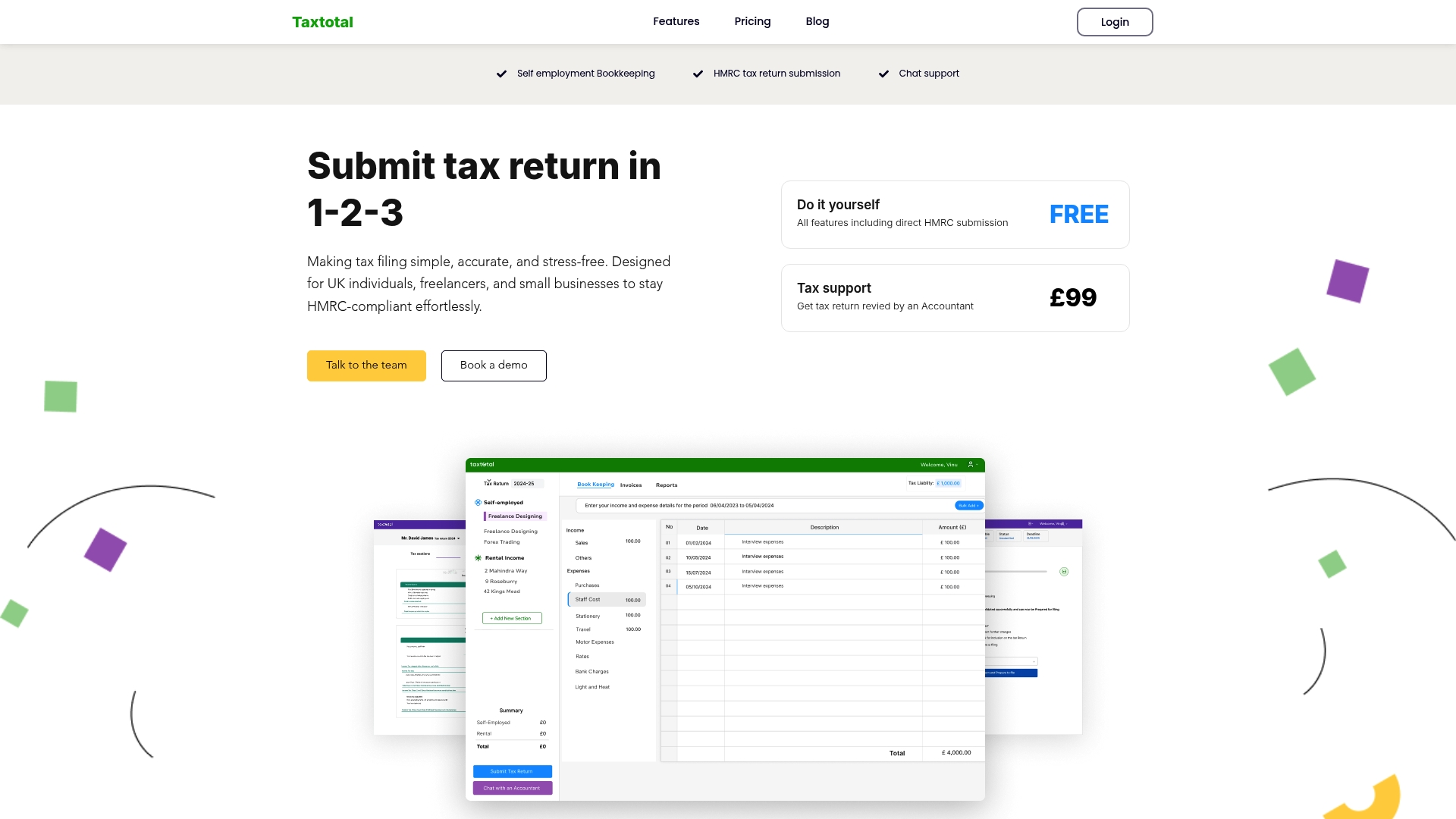
Explore expert advice and tools designed for self-employed individuals in our Tax Support – Taxtotal section and deepen your knowledge with insights on starting your venture in Entrepreneurship – Taxtotal. Take control of your tax responsibilities today by visiting Taxtotal and experience a seamless way to prepare, review, and submit your tax returns directly to HMRC.
Frequently Asked Questions
What is a sole trader?
A sole trader is an individual running their business independently, with no legal separation between personal and business finances.
What are the main tax obligations for sole traders?
Sole traders are required to pay Income Tax on their business profits, submit annual Self Assessment tax returns, and make National Insurance contributions based on their earnings.
What is the difference between a sole trader and a limited company?
The main difference lies in liability; sole traders have unlimited personal liability for business debts, while limited companies offer protection by limiting liability to the company’s assets.
Do sole traders need to register for VAT?
Yes, sole traders must register for VAT if their annual turnover exceeds £85,000, in which case they need to apply for VAT registration.