
Sorting out your Self Assessment tax return as a freelancer or sole trader in the United Kingdom can quickly lead to frustration and costly mistakes. The rules keep changing, and even a small error may prompt HM Revenue & Customs scrutiny or missed financial allowances. With comprehensive guidance available from HMRC, you can find expert support that clarifies your obligations, improves accuracy, and keeps your business safely compliant under United Kingdom tax law.
Table of Contents
- Expert Tax Support For Self-Employed UK
- Types Of Tax Support For Freelancers And Sole Traders
- How Expert Guidance Ensures HMRC Compliance
- Risks, Penalties And Cost Of Inaccurate Returns
- Choosing Between Self-Managed And Expert Assistance
Key Takeaways
| Point | Details |
|---|---|
| Importance of Accurate Tax Returns | Proper tax returns are crucial to avoid HMRC inquiries and penalties, ensuring you understand allowances and expenses. |
| Benefits of Expert Support | Expert guidance significantly improves accuracy, maximises deductions, and provides peace of mind, saving time and avoiding compliance issues. |
| Types of Support Available | Options include digital tools, professional advisers, online resources, or a hybrid approach, each suited to different business needs and complexities. |
| Risks of Inaccurate Returns | Errors in tax returns can lead to severe financial penalties, stress, and potentially damage to your business reputation. |
Expert tax support for self-employed UK
Getting your Self Assessment return right matters far more than you might think. A single error can trigger HMRC inquiries, missed allowances cost you money, and confusion about what counts as an expense leaves valuable deductions on the table. The difference between struggling alone and having expert support is substantial.
HMRC recognises this challenge and provides comprehensive guidance to help you navigate your tax obligations. Their resources cover everything from registering as self-employed through to understanding allowable expenses and filing deadlines. You can access guidance on self-employment specifically designed for the self-employment section of your tax return, plus educational content that breaks down what you need to know.
Why Expert Support Makes a Real Difference
Most freelancers and sole traders juggle multiple tasks simultaneously. Your focus is building your business, not deciphering tax codes. Expert support removes this burden in several ways:
- Accuracy matters: Professional review catches errors before submission, avoiding penalties and interest charges
- Maximising deductions: Experts identify expenses you might miss, keeping more money in your pocket
- Peace of mind: Knowing your return is correct means no sleepless nights waiting for HMRC contact
- Time savings: No more evenings spent scrolling through guidance documents or calculator apps
- Compliance certainty: Professional support ensures you meet your obligations fully and on time
Expert tax support isn’t a luxury—it’s practical protection that saves both time and money while keeping your business compliant with UK tax law.
What Proper Support Includes
When you receive genuine expert tax support, you get access to professionals who understand your specific situation. This goes beyond generic online calculators. Proper support includes:
- Detailed review of your income records and business expenses
- Verification that you’re claiming all legitimate deductions available to your business type
- Guidance on tax planning strategies specific to your earnings pattern
- Clear explanations of your tax position so you understand your return
- Direct submission to HMRC, eliminating your administrative burden
You also gain access to knowledgeable advisers who can answer your questions directly rather than leaving you searching through government websites for answers that may or may not apply to your situation.
Pro tip: Start gathering your records early rather than scrambling in January—keeping monthly expense summaries means your tax adviser can process your return faster and catch potential issues before the deadline.
Types of tax support for freelancers and sole traders
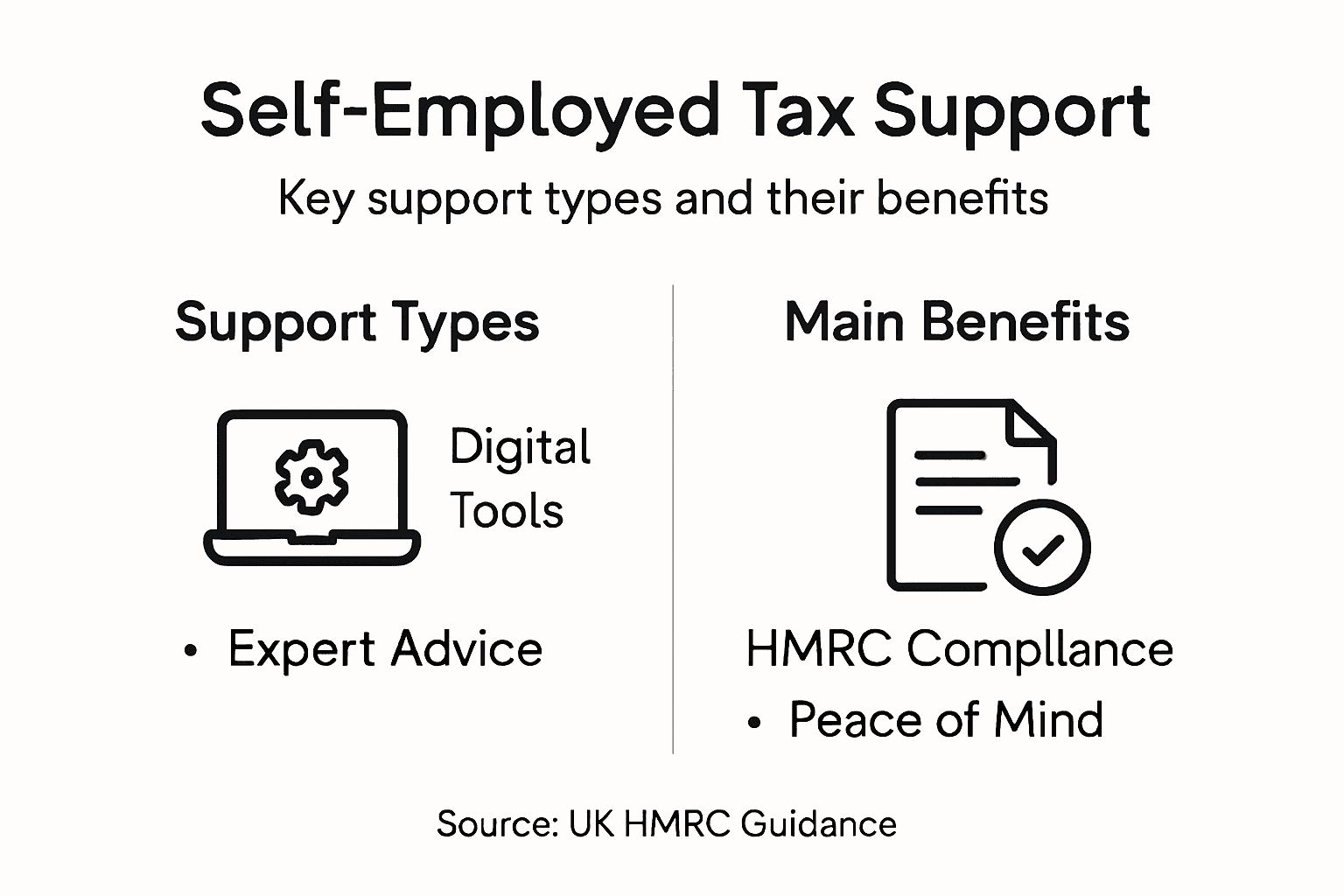
Tax support comes in many forms, and knowing which option suits your situation makes the filing process far less stressful. You might need digital tools, professional advice, online resources, or a combination of all three. The key is finding support that matches your confidence level and business complexity.
Digital Tools and Software
Technology has transformed how self-employed people manage their taxes. Digital solutions streamline record-keeping and reduce manual calculation errors significantly.
Making Tax Digital for Income Tax requires approved software to create digital records, send quarterly updates, and file returns online. This system enhances accuracy by eliminating paper-based errors and making your records instantly accessible when you need them.
Many freelancers appreciate digital tools because they:
- Track income and expenses automatically
- Calculate tax liabilities in real time as you enter data
- Generate reports ready for accountants or HMRC submission
- Store receipts and invoices digitally for easy retrieval
- Alert you to upcoming tax deadlines
Professional Accountants and Advisers
Some freelancers prefer hands-on support from qualified professionals. An accountant handles everything from record review through to HMRC submission, leaving you free to focus on your work.
Professional advisers offer expertise that software cannot—they understand your specific business situation and identify tax-saving opportunities tailored to your circumstances.
Accountants typically provide:
- Complete Self Assessment return preparation
- Expense categorisation and optimisation
- Quarterly management accounts
- Tax planning advice for future years
- Representation if HMRC queries your return
Online Resources and Government Guidance
If you prefer independence with support available when needed, HMRC and MoneyHelper offer structured guidance. Tax and National Insurance information covers registering for Self Assessment, allowable expenses, and payment options, making it easier to understand your obligations without paying for professional services.
These resources explain trading allowances, voluntary National Insurance contributions, and expense categories relevant to your trade.
Hybrid Support Models
Many freelancers use software to maintain records throughout the year, then have a professional review their return before submission. This approach balances cost with accuracy and peace of mind.
Pro tip: Choose your support method based on your business turnover and comfort with numbers—higher earnings and more complex circumstances generally justify professional advice, whilst straightforward freelance income often works well with quality software alone.
Here is a side-by-side comparison of popular tax support methods for UK freelancers:
| Support Type | Cost Level | Best For | Main Limitation |
|---|---|---|---|
| Digital Tools | Low | Simple businesses, tech-savvy | May miss complex deductions |
| Professional Adviser | Moderate to High | Higher income, complex needs | Higher annual fees |
| Online Resources | Free | Independent, budget-conscious | Guidance not personalised |
| Hybrid Model | Medium | Balance of cost and accuracy | Still requires record-keeping |
How expert guidance ensures HMRC compliance
HMRC compliance isn’t about luck or hoping your return passes inspection. It’s about having someone who understands the rules, knows what HMRC expects, and structures your return accordingly. Expert guidance removes guesswork entirely.

When you work with a qualified tax adviser, you gain access to knowledge built through years of client experience and continuous regulatory updates. These professionals understand exactly what triggers HMRC scrutiny and what keeps your return problem-free.
Understanding HMRC Expectations
HMRC doesn’t simply accept every return that arrives. They review submissions against specific criteria, checking consistency, reasonableness of expenses, and compliance with current regulations.
Expert advisers know these expectations intimately. They ensure your return:
- Shows realistic expense claims for your business type
- Demonstrates consistent record-keeping practices
- Complies with current tax legislation and allowances
- Includes all required information in the correct format
- Reflects your actual business circumstances accurately
This alignment prevents the queries, investigations, and potential penalties that cost far more than professional advice.
Professional Standards and Regulation
Registered tax advisers meet strict professional standards set by HMRC. From April 2026, tax adviser registration requirements become mandatory, ensuring all professionals offering tax support maintain minimum competency levels and adhere to ethical standards.
This regulation protects you directly. When your adviser is qualified and registered, you know they’re held accountable for their work.
Expert guidance backed by professional standards means your return reflects compliance with HMRC requirements, not just good intentions.
Accuracy Through Experience
Professional tax advisers encounter countless scenarios across different business types. They’ve seen what works, what doesn’t, and what catches HMRC’s attention. This experience translates directly into more accurate returns.
They identify:
- Expenses you might overlook entirely
- Allowances relevant to your specific situation
- Inconsistencies that could trigger questions
- Documentation gaps before submission
- Tax planning opportunities for future years
Peace of Mind and Support
When HMRC does contact you—whether routine or more serious—having professional support changes everything. Your adviser communicates with HMRC on your behalf, answers technical questions, and protects your interests throughout any enquiry.
This level of support exists only when you’ve worked with someone qualified to provide it.
Pro tip: Choose a registered or professionally qualified adviser rather than using unqualified bookkeepers for compliance matters—the difference in protection and accuracy justifies the investment, especially as mandatory registration standards increase from 2026 onwards.
Risks, penalties and cost of inaccurate returns
Inaccurate tax returns carry real consequences that extend far beyond a simple mistake. HMRC takes discrepancies seriously, and the financial and legal fallout can damage your business for years. Understanding these risks motivates getting things right from the start.
An inaccurate return isn’t just embarrassing—it triggers investigations, penalties, interest charges, and reputational damage. The costs accumulate quickly and often exceed what you’d pay for professional support upfront.
Financial Penalties
Self Assessment tax return requirements specify that inaccurate submissions result in financial penalties determined by severity and intent. HMRC’s penalty regime has tightened significantly in recent years, with increasing surcharges designed to deter non-compliance.
Penalties typically include:
- Late filing penalties starting at £100
- Late payment surcharges escalating over time
- Accuracy-related penalties ranging from 20% to 100% of underpaid tax
- Interest on unpaid tax calculated daily from the due date
- Additional penalties if HMRC believes you acted deliberately or recklessly
These aren’t small amounts. A £5,000 underpayment could result in £1,000 to £5,000 in penalties alone, plus interest compounding monthly.
Below is a summary of common HMRC penalties and potential impact for inaccurate tax returns:
| Penalty Type | Typical Amount or Range | Business Impact |
|---|---|---|
| Late Filing Penalty | From £100 | Immediate fine, accumulates if unresolved |
| Late Payment Surcharge | Increasing by payment delay | Additional cost, affects cash flow |
| Accuracy-Related | 20%-100% of unpaid tax | Major financial loss, possible enquiry |
| Interest on Tax Owed | Daily, variable | Ongoing cost until tax is settled |
| Deliberate Error | Up to criminal prosecution | Severe legal and reputational damage |
Stress and Business Disruption
When HMRC suspects inaccuracies, they open an enquiry. This means providing evidence, answering detailed questions, and proving your position to HMRC’s satisfaction. The process demands time and creates anxiety.
Inaccurate returns don’t just cost money—they consume your time, energy, and mental wellbeing whilst you explain mistakes to tax authorities.
During an enquiry, you cannot:
- Focus fully on growing your business
- Plan with confidence about your tax position
- Sleep soundly knowing HMRC is investigating your records
- Make business decisions without uncertainty hanging over you
Escalation and Serious Consequences
If HMRC suspects deliberate dishonesty rather than carelessness, matters escalate dramatically. Criminal prosecution becomes possible, bringing legal costs, potential imprisonment, and permanent damage to your professional reputation.
Even serious negligence can result in:
- Daily contact with HMRC compliance teams
- Demands for back-years of returns
- Investigation into multiple tax years simultaneously
- Professional reputation damage affecting client trust
- Difficulty obtaining business credit or insurance
Prevention Through Accuracy
The good news: accurate returns avoid all of this entirely. Getting your return right eliminates penalties, enquiries, stress, and legal risk completely. The investment in professional support pays for itself many times over.
Pro tip: Submit your return before the deadline with confidence by having a professional review it first—catching errors before HMRC does costs far less than fixing them after penalties arrive.
Choosing between self-managed and expert assistance
The decision between managing your tax yourself or hiring an expert depends on your circumstances, confidence level, and business complexity. There’s no one-size-fits-all answer, but understanding your options helps you choose wisely.
Both paths work for different people. The question is which fits your situation, skills, and priorities better. Getting this decision right affects your accuracy, stress levels, and long-term compliance.
Self-Managed with Digital Tools
Many freelancers successfully manage their own tax affairs using approved software. This approach suits straightforward business situations where you’re comfortable with numbers and have time to dedicate to record-keeping.
Making Tax Digital for Income Tax enables you to maintain digital records, send quarterly updates, and file returns entirely yourself. This path offers cost savings and complete control over your information.
Self-management works best when you:
- Have simple income from a single source
- Claim only basic, straightforward expenses
- Understand tax concepts reasonably well
- Have time to maintain accurate records monthly
- Feel confident interpreting tax guidance independently
- Don’t struggle with financial organisation
When Expert Assistance Makes Sense
As your business grows or becomes more complex, expert help becomes increasingly valuable. Multiple income streams, complex expenses, or substantial earnings justify professional support.
Expert assistance isn’t just about filing returns—it’s about tax planning, risk reduction, and identifying opportunities you might miss alone.
Consider professional help if you:
- Earn £50,000 or more annually
- Have multiple income sources or business structures
- Employ staff or pay contractors
- Claim complex expenses or capital allowances
- Have investment income alongside self-employment
- Feel overwhelmed by tax obligations
- Want someone to answer your questions directly
The Hybrid Approach
Many successful freelancers split responsibilities. You maintain records throughout the year using software, then a professional reviews everything before submission. This balances cost control with accuracy and peace of mind.
This approach combines strengths of both methods, reducing your workload whilst maintaining oversight. You stay engaged but benefit from professional quality control.
Finding the Right Professional
Tax adviser registration ensures qualified professionals meet professional standards and accountability requirements. When choosing an adviser, verify their qualifications and understand their fees structure upfront.
Pro tip: Start with self-managed software for your first year to understand your tax position, then decide whether professional support suits your situation—you’ll make a more informed choice once you’ve experienced the process firsthand.
Take Control of Your Self-Assessment with Expert Support at Taxtotal
Navigating the complexities of Self Assessment returns can be overwhelming, especially when accuracy and compliance are crucial to avoid costly penalties from HMRC. This article highlights common challenges faced by freelancers and sole traders such as managing expenses, maximising deductions, and ensuring full compliance. If you recognise the stress of cumbersome tax filing or worry about missing important details, our Tax Support – Taxtotal services are designed to simplify your tax journey by combining easy-to-use technology with professional guidance.
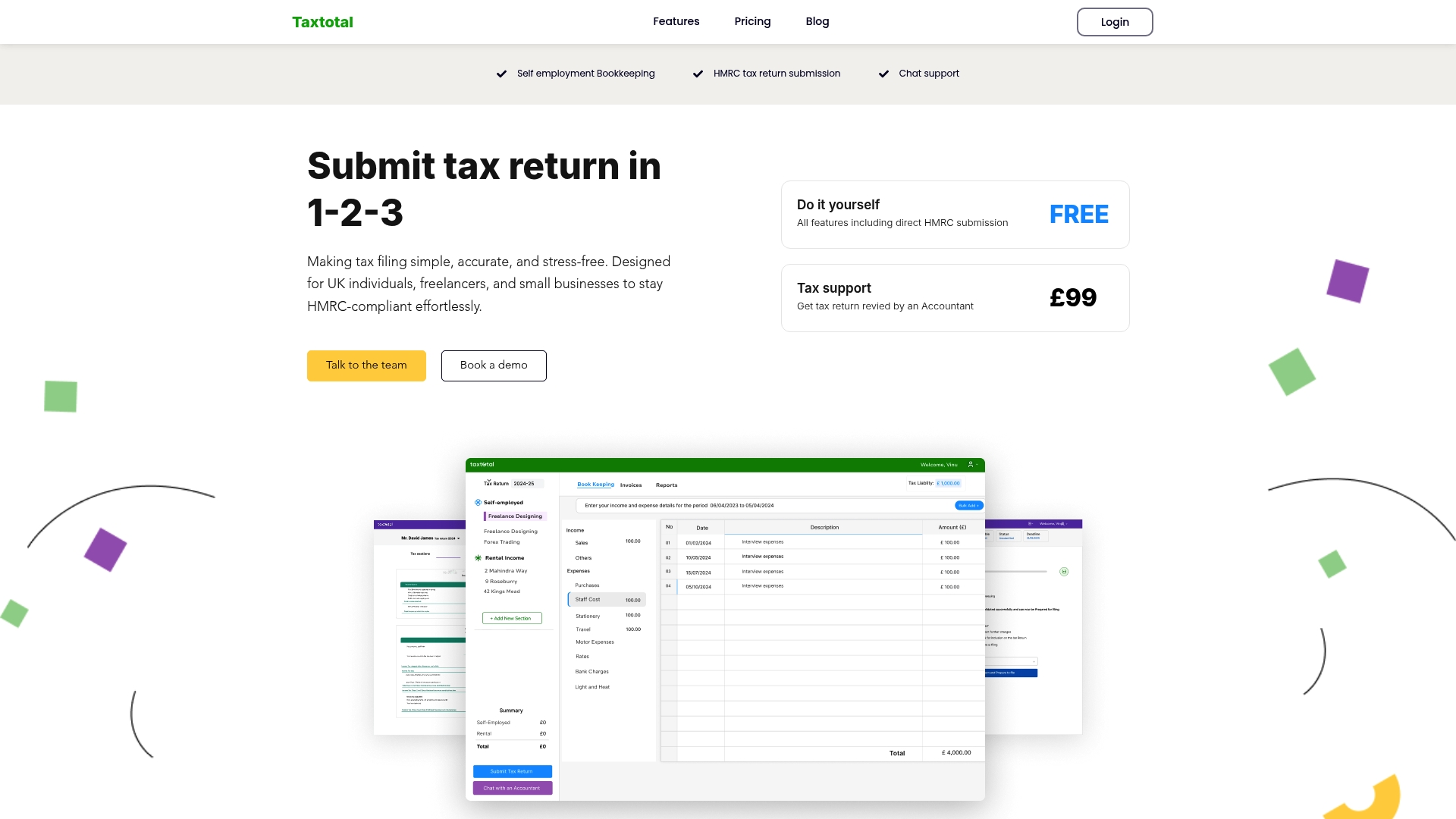
Experience the peace of mind that comes from real-time tax calculations, automated error checking, and direct HMRC submission tailored specifically for the UK self-employed. Whether you prefer managing your finances independently or want expert review for accuracy, Taxtotal.co.uk provides solutions that address your unique needs. Don’t wait for penalties or HMRC enquiries to disrupt your business — explore how our Accounting – Taxtotal tools and personalised support can help you file confidently and on time. Take your first step towards stress-free, compliant tax filing today at Taxtotal.co.uk.
Frequently Asked Questions
What is self-assessment in the UK?
Self-assessment is a system used by HMRC to collect income tax from individuals, including self-employed individuals, who must report their earnings and expenses annually.
Why should self-employed individuals seek expert tax support?
Expert tax support ensures accuracy in tax returns, maximises deductions, provides peace of mind, saves time, and guarantees compliance with tax regulations.
What are the risks of filing an inaccurate tax return?
Filing an inaccurate tax return can result in financial penalties, interest charges on unpaid tax, stress from HMRC enquiries, and potential reputational damage to your business.
How can I choose the right tax support for my self-employment situation?
Choosing the right tax support depends on your business complexity, earnings, and comfort with numbers. You can select between digital tools, professional accountants, HMRC resources, or a hybrid model that combines self-management with expert assistance.